

A company's activities, owners, revenue and legal purpose determine which Mexican tax regime applies. Review those facts when incorporating the business and whenever they change. A new shareholder or activity may also require an update to the company's RFC registration.
Test the regime against the real operation
Before choosing or changing a regime, model the company’s actual revenue, costs, payroll, partner transactions and cash timing for several months. The best option is not the one with the shortest description; it is the one whose obligations the business can support consistently with records, contracts and cash flow.
The usual comparison is between the general corporate regime and RESICO for legal entities. Both apply a 30% income tax rate to taxable profit, but they recognize revenue, deductions, and provisional payments differently. To estimate what the company will pay each month, you need to understand the calculation under its regime.
A proper review of a legal entity's tax regime separates the applicable rate, administrative relief, and actual tax calculation. The label on the tax status certificate does not prove that every calculation is correct.
Confirm the facts before comparing regimes
Start with the company's records:
- articles of incorporation and corporate purpose;
- RFC registration, tax situation certificate, and registered duties;
- shareholder ledger or equity records;
- prior-year revenue and the current forecast;
- activities that produce each revenue stream;
- transactions with owners, related parties, or trusts;
- payroll, inventory, assets, and major expenses.
These records show whether the company is registered under the applicable regime. They also expose a common mismatch: the operation changed, but the RFC, CFDI setup, and accounting did not.
General regime and RESICO use different calculations

| Point | General regime | RESICO for legal entities |
|---|---|---|
| Who uses it | Title II legal entities that do not receive another treatment | Resident entities owned only by individuals that meet the revenue cap and all other conditions |
| Revenue recognition | Follows the accrual rules in the Income Tax Law | Generally recognizes revenue when collected |
| Deductions | Applies authorized deductions under their statutory requirements | Generally recognizes authorized deductions when paid |
| Provisional payment | Uses nominal revenue and a profit coefficient | Subtracts paid deductions from collected revenue for the cumulative period |
| Income tax rate | 30% of taxable profit | 30% of taxable profit |
| Main control | Accruals, coefficient, deductions, and year-end close | Collections, payments, CFDI, deductions, and continued eligibility |
Under RESICO, the company still needs bookkeeping, an annual return and supporting records, along with VAT and payroll compliance where applicable. Allow for that work when comparing accounting services or setting the monthly budget.
How the general regime works
The annual return applies a 30% rate to taxable profit. Article 9 of Mexico's Income Tax Law starts with taxable revenue, subtracts authorized deductions and paid employee profit sharing, and then applies available tax-loss carryforwards where allowed.
Provisional payments do not wait for the year's actual profit. Article 14 of the Income Tax Law takes a profit coefficient derived from a prior year and applies it to cumulative nominal revenue. The company then calculates the tax and credits earlier provisional payments.
The result can feel counterintuitive. A company may have little cash after a slow collection month and still owe a provisional payment based on nominal revenue and a historical coefficient. A tax forecast therefore needs separate lines for invoicing, collections, and provisional income tax.
If the required coefficient exceeds the company's estimated coefficient for the current year, the law provides a procedure to request a lower one beginning in the second half of the year. The company cannot make that reduction on its own.
Which companies fall under corporate RESICO
Article 206 of the Income Tax Law places Mexican resident legal entities owned solely by individuals in RESICO when prior-year revenue does not exceed MXN 35 million. A new company applies the same threshold to its revenue estimate.
The revenue ceiling is only one condition. The law excludes, among other cases, some owners who control or manage other companies, businesses conducted through trusts or joint ventures, and taxpayers covered by other chapters or Title III. A simple shareholder list may hide a disqualifying relationship with another company.
The statute says qualifying companies "shall comply" with the chapter. Corporate RESICO is not a benefit that any company below MXN 35 million may turn on and off based on preference. Eligibility must be checked in full, then the company should confirm that its RFC and returns reflect the correct regime. The SAT portal for corporate RESICO provides the applicable filing services.
What RESICO changes in cash-flow records
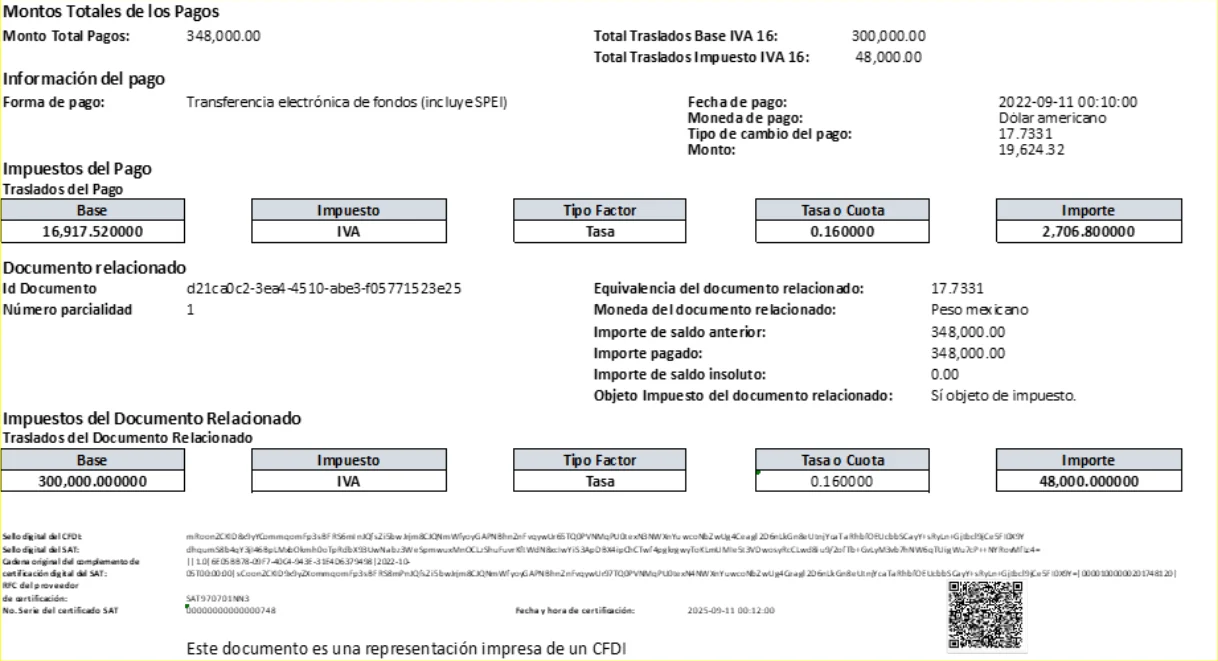
As a general rule, RESICO recognizes revenue when the company receives it. It recognizes authorized deductions when the company pays them and meets the remaining requirements. The monthly provisional calculation subtracts those paid deductions and other permitted items from cumulative collected revenue, then applies the Article 9 rate.
Each monthly close should answer:
- which invoices were collected;
- which payments cleared the bank;
- whether payment supplements were issued when required;
- whether each deduction has a CFDI and meets the other tax requirements;
- whether advances, returns, and discounts landed in the correct period.
Record the invoice date and payment date separately. For example, an invoice issued in one month and collected in the next needs a record of both events. Use those dates to review the RESICO calculation and follow up on unpaid customer and supplier balances.
Nonprofit legal entities are a separate case
An asociación civil does not enter Title III merely because its name says "nonprofit." It must fit one of the categories in Article 79 of the Income Tax Law and meet the duties attached to that category.
Title III status also does not make every organization an authorized donee. Issuing deductible donation receipts requires separate authorization. Confusing those concepts can lead to incorrect CFDI, returns, and treatment of distributable surplus.
Coordinated transport entities, certain agricultural businesses, corporate groups, and cooperatives have their own provisions as well. They are not alternative versions of the general regime selected to reduce a rate.
Make the filings agree with the books

The monthly file should connect CFDI, bank records, ledgers, and returns. Review at least:
- provisional income tax;
- VAT charged, creditable, and withheld;
- payroll, professional-fee, and rent withholding when applicable;
- income, expense, payment, and payroll CFDI;
- bank reconciliations and accounts receivable;
- electronic accounting and trial balances when they must be submitted;
- IMSS and INFONAVIT payments when the company has employees;
- related-party transactions and owner accounts.
A calendar-year legal entity files its annual return within three months after year-end. The SAT uses different deadlines for entities in liquidation and nonprofit organizations, so the filing calendar must match the company's regime and legal status.
Owner payments need their own support
When the company transfers money to an owner, record why it made the payment and keep the supporting documents. Reimbursements, loans and dividends have different requirements:
| Transaction | Records to review |
|---|---|
| Expense reimbursement | CFDI, proof of payment, and business purpose |
| Shareholder loan | Agreement, terms, accounting entry, and tax treatment |
| Capital contribution | Corporate approval, bank evidence, and updated equity records |
| Dividend | Shareholder resolution, CUFIN, withholding, and the required CFDI |
| Salary or professional fee | Agreement, CFDI, withholding, and evidence of the work |
For an owner loan, keep the agreement and payment terms with the accounting entry, then track repayments. A bank memo alone leaves those details unexplained.
Errors that point to a poorly administered regime
Review the file if:
- the tax situation certificate lists one activity while CFDI describe another;
- RESICO calculations use issued invoices without separating collections;
- the general regime uses the month's book profit as the provisional tax base;
- deductions are booked without checking CFDI, payment method, or evidence of the transaction;
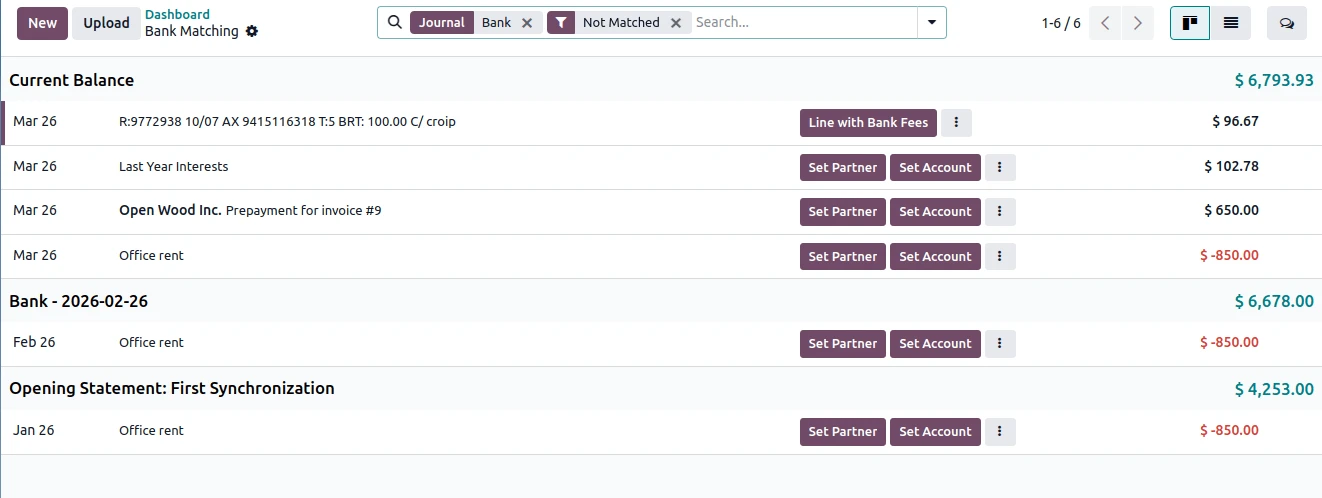
- shareholder accounts collect unreconciled transfers with no agreements;
- the RESICO revenue limit and ownership conditions are not tested at year-end;
- the annual return is prepared before reconciling provisional payments and financial statements.
These errors do not all require a regime change. Some call for amended returns, an RFC notice, or better controls. The review should separate an incorrect registration from weak accounting.
Run a tax-regime review before year-end
Do not wait until the annual-return portal opens. Assemble:
- the current tax situation certificate;
- corporate minutes and the current ownership structure;
- year-to-date revenue and the forecast through December 31;
- collections and payments if the company uses RESICO;
- the profit coefficient and provisional payments under the general regime;
- tax losses, CUFIN, CUCA, and owner accounts;
- filed and outstanding obligations;
- planned changes for the following year.
Fintax can review the company's regime and accounting close using these records. Ask for a written explanation of which rules apply, what needs correcting and who will complete each action by its deadline.
Frequently asked questions
Can every legal entity choose between the general regime and RESICO?
No. RESICO has conditions and exclusions. The company must review residence, owner type, revenue, control, related parties, and activities before determining the regime.
Does corporate RESICO use a lower income tax rate?
No. It applies the 30% Article 9 rate to taxable profit. Its main difference is the use of collected revenue and paid deductions in the calculation.
Does the general regime pay income tax on gross revenue?
The annual rate applies to taxable profit. Provisional payments use nominal revenue and a profit coefficient, so their calculation is different from subtracting each month's actual expenses.
When should the tax regime be reviewed?
At incorporation, before starting a new activity, after a change in ownership or control, when revenue approaches the RESICO limit, and before year-end.
Official links to complete the task
Open official services from a new browser tab, confirm the taxpayer and period, and save the resulting acknowledgment or evidence with the case.