

Quick Answer
Severance pays accrued concepts at the end of the relationship; compensation depends on the cause and the case. Before paying, confirm date, salary, seniority, vacation, premiums, variables, and reason; afterwards reconcile calculation, CFDI, deregistration, and transfer.
Distinguish between severance and compensation, and document date, cause, concepts, CFDI, deregistration, and payment to close the employment relationship.
Necessary Labor Review
The facts and cause change the calculation. Do not deliver a form or obtain signatures without validating the case.
Severance and settlement are not synonyms
Severance includes amounts accrued at the end of a relationship. Compensation or settlement depends on the cause and facts; it should not be added or excluded just by using a template.
The calculation must separate each concept, its base, and period. It also needs to match payroll, affiliation deregistration, bank, and labor documentation.
Example: resignation with pending variables
A person resigns mid-pay period and has days worked, pending vacation, and a commission not yet closed. The company first documents date and cause, calculates accrued concepts, defines which variable is already due, and reconciles the CFDI with the transfer and signed receipt.
The correct calculation starts by reconstructing what was accrued and the cause of termination; the calculator comes afterward.
— Fintax
The cause defines the path
| Scenario | First document | Concepts to review |
|---|---|---|
| Resignation | Written notice and date | Accrued amounts and benefits |
| Agreed termination | Agreement | Accrued amounts and agreement |
| Dismissal | Facts and communication | Accrued amounts and applicable compensation |
| End of contract | Contract and term | Accrued amounts and real cause |
Frequently Asked Questions
Does every departure generate a settlement?
No. Always review cause, facts, and accrued concepts; compensation is not presumed equal in all cases.
Can I use a generic calculation?
Use it only as a draft. Verify integrated salary, seniority, benefits, variables, and cause.
What must match at the end?
Calculation, CFDI, transfer, receipt, deregistration, and payroll records.
Calculation and closure path
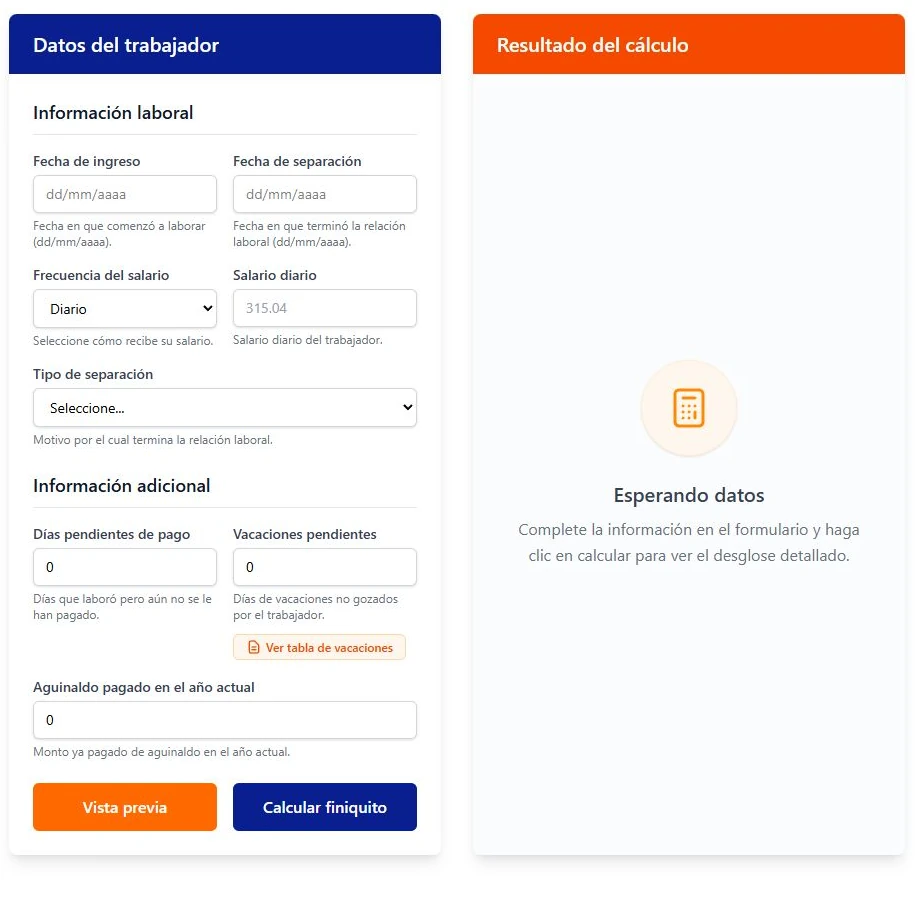
- Document cause and date.
- Reconstruct salary and benefits.
- Calculate each concept separately.
- Review labor and tax implications.
- Pay, stamp, and file the closure.
Differences that delay closure
- Confusing resignation with dismissal.
- Forgetting variables already accrued.
- Using outdated salary or seniority.
- Stamping an amount different from what was paid.
Termination file
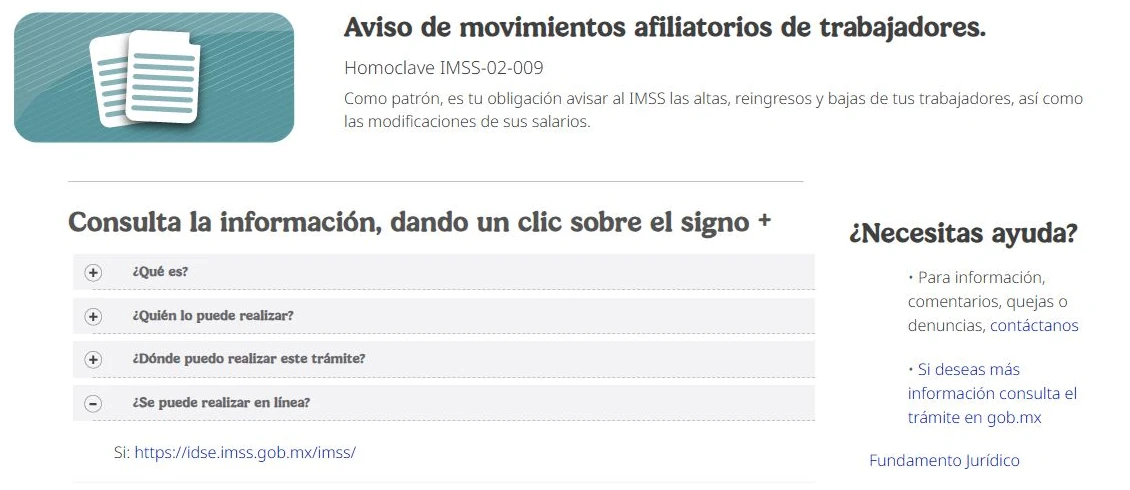
- Document that proves cause and date.
- Current contract, salary, and benefits.
- Control of vacation and variables.
- Reviewed calculation and authorization.
- CFDI, transfer, and delivery receipt.
Sources and readings to continue
Consult official sources: Federal Labor Law, payroll CFDI information, IMSS SUA.
To complete the process within Fintax, review: Payroll CFDI, IMSS contribution control, monthly accounting closing.
What to do now
Turn this review into a file with responsible person, date, source, and evidence. If there is a material difference, an overdue obligation, or a decision that changes the calculation, validate the case with the person responsible for your accounting before submitting, canceling, or paying.