
Quick Answer
To reconcile banks against CFDI, classify each transaction as sale, purchase, commission, tax, transfer, loan, contribution, or pending item; link it to its supporting document and explain any difference. The close is complete when the balance matches and open items have an owner and date.
A useful reconciliation explains each bank transaction with CFDI, voucher, or document and leaves a short list of open items with an assigned responsible party.
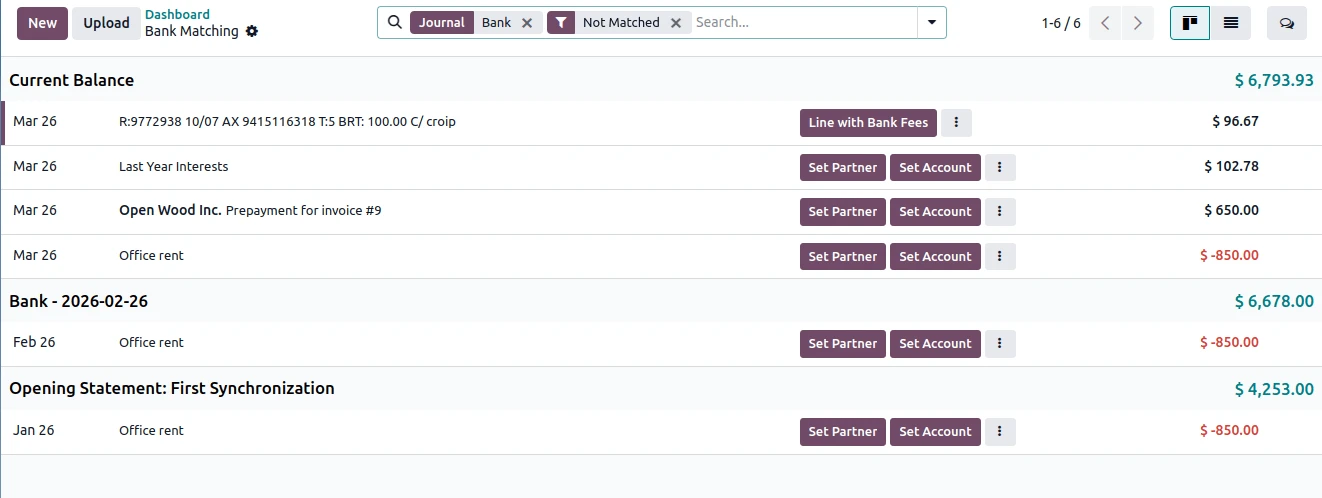
Start with the unexplained bank movements
Match each deposit and payment to a customer, supplier, CFDI or documented non-tax movement. Put transfers, fees, refunds and multi-invoice collections in a separate exception list instead of forcing them into the closest invoice. Close the month only when the remaining difference has an owner, evidence and a resolution date.
Don't Delete Differences
A small difference can reveal a commission, duplicate, refund, or personal transaction. Classify it and document its resolution.
Practical Case: Net Deposit That Doesn't Match Sales
A payment gateway deposits 96,200 pesos, but sales for the period total 100,000. The difference may be commission, VAT on the commission, refund, or withholding. If only the deposit is recorded as income, sales and expenses are understated. The correct reconciliation reconstructs the gross amount and documents each deduction.
Reconciling is not forcing equality: it is explaining each difference with sufficient evidence so another person can reconstruct it.
— Fintax
Map of Transactions and Evidence
| Transaction | Primary Support | Common Difference | Treatment |
|---|---|---|---|
| Customer Collection | CFDI and Application | Grouped Deposit | Schedule by Customer |
| Supplier Payment | CFDI and Authorization | Partial Payment | Balance by UUID |
| Bank Commission | Statement and CFDI | Net vs. Gross | Separate Expense and VAT |
| Transfer | Both Accounts | Only One Side Appears | Match Date and Reference |
Monthly Reconciliation Routine
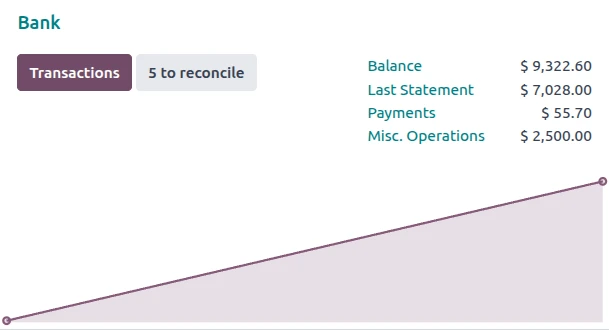
- Freeze the period and gather bank statements and collection reports.
- Import transactions without duplicating charges or deposits.
- Link each transaction with CFDI, voucher, or valid non-fiscal document.
- Investigate differences by date, amount, reference, and counterparty.
- Approve the reconciliation and carry forward only justified items.
What It Means to Reconcile Bank, Accounting, and CFDI
Bank reconciliation compares the bank balance with the accounting balance and explains items that still don't match. By integrating CFDI, it adds a third view: which fiscal document supports the collection, payment, commission, refund, or transfer.
A difference is not always an error. It can be a deposit in transit, a pending check, or a deducted commission. Control lies in classifying it, assigning evidence, and preventing it from carrying over indefinitely to the next month.
Shortcuts That Weaken the Close
- Reconciling only the ending balance and not the transactions.
- Recording net deposits as sales without separating commissions.
- Deleting small differences without identifying their cause.
- Confusing transfers between accounts with income or expenses.
Documents to Close Without Guesswork
- Complete bank statements from all accounts and payment gateways.
- CFDI issued, received, canceled, and replaced during the period.
- Sales cutoffs, terminal reports, and deposits in transit.
- List of loans, contributions, transfers, and refunds.
- List of open items with responsible party and resolution date.
Frequently Asked Questions
Is every bank deposit income?
No. It can be a loan, contribution, transfer, or refund; classification depends on origin and supporting document.
What age should be tolerated for an open item?
Define a short internal policy. Unresolved items should be escalated because they lose evidence and contaminate subsequent closes.
Are payment gateways also reconciled?
Yes. You must reconcile gross sales, commissions, taxes, refunds, withholdings, and net deposit.
Sources and Further Reading
Consult official sources: Federal Fiscal Code, SAT CFDI verifier.
To complete the process within Fintax, review: minimum controls to close the month, electronic invoicing review, tax close checklist.
What to Do Now
Turn this review into a file with responsible party, date, source, and evidence. If there is a material difference, an overdue obligation, or a decision that changes the calculation, validate the case with the person responsible for your accounting before submitting, canceling, or paying.
Official links to complete the task
Open official services from a new browser tab, confirm the taxpayer and period, and save the resulting acknowledgment or evidence with the case.