

The SAT compliance opinion can affect contracts, suppliers, bids, financing, and internal trust. For a company, it is not enough to just download it when someone requests it. It is advisable to review it proactively and understand which obligation each inconsistency generates.
Assign every inconsistency to its evidence owner
Convert each observation into a row with obligation, period, acknowledgment, payment, responsible team and next step. Payroll, treasury or administration may hold the missing proof even when accounting owns the review. Correct the underlying record first; use a clarification only when the official status still disagrees with supported facts.
The SAT offers queries for the compliance opinion of tax obligations for companies and also procedures for clarification. The usefulness lies in supporting these actions with acknowledgments, declarations, payments, and working papers.
When to check it
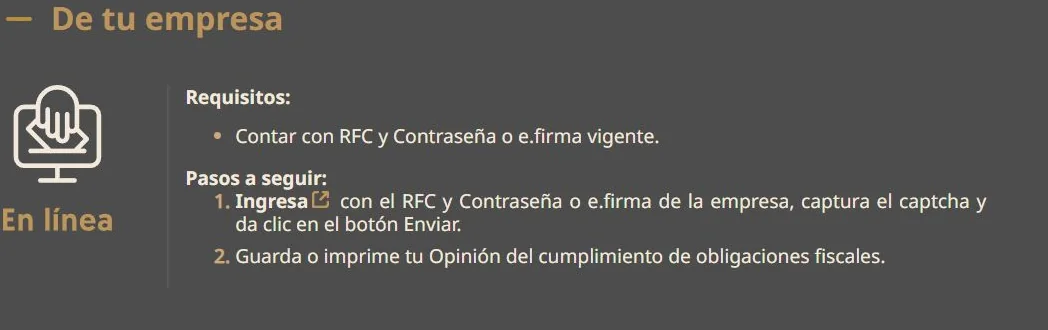
- Before signing relevant contracts with clients or government.
- Before requesting financing or updating bank files.
- After submitting late or supplementary declarations.
- After correcting debts, fines, or differences.
- As a monthly control if the company depends on suppliers or bids.
How to read an inconsistency
| Observed data | What to check first |
|---|---|
| Pending declaration | Period, obligation, acknowledgment, and submission date. |
| Unrecognized payment | Capture line, bank, date, and reference. |
| Obligation difference | Registration of obligations and current tax regime. |
| Credit or debt | Resolution, agreement, payment, or pending clarification. |
Do not respond without documentation
A weak clarification can prolong the problem. Before sending it, gather acknowledgments, payments, declarations, and accounting explanation.
Recommended process
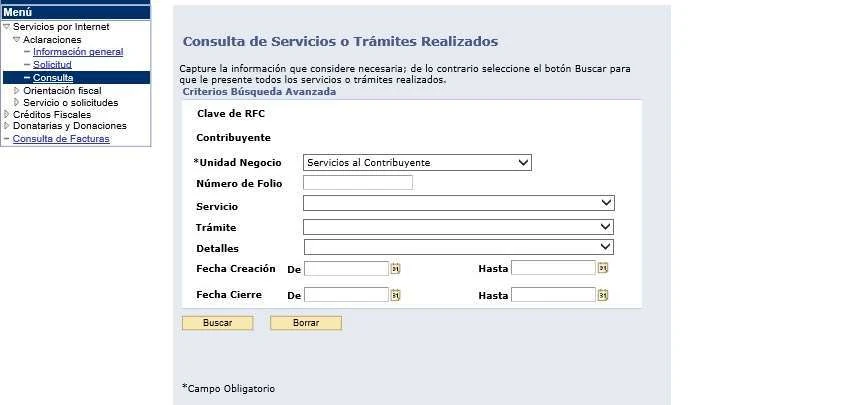
- Download the opinion and record the consultation date.
- Identify obligation, period, and type of inconsistency.
- Cross-check against acknowledgments, payments, accounting, and banks.
- Correct if a submission or payment is truly missing.
- Send clarification only with sufficient evidence.
- Follow up and save the updated opinion when the status changes.
How Fintax can help
Fintax can review your compliance opinion, locate the source of inconsistencies, and prepare a correction or clarification file. The goal is that compliance is not discovered only when a client is already waiting for the document.
Official links to complete the task
Open official services from a new browser tab, confirm the taxpayer and period, and save the resulting acknowledgment or evidence with the case.