
Finding a SAT notice you overlooked calls for a review before you submit anything or pay. The useful question is: what official action exists today, and what remains outstanding? You may face a formal request whose response period has expired, a payment reference that is no longer valid, or collection proceedings. A late response does not automatically resolve all three: Mexico's Federal Tax Code, or CFF, distinguishes actions concerning missing returns from administrative enforcement proceedings. CFF, Articles 41 and 145.
Identify the document before acting on the message
Publicación de InstagramMostrarOcultar
Original Fintax Instagram publication about resuming action on an overlooked SAT notice.
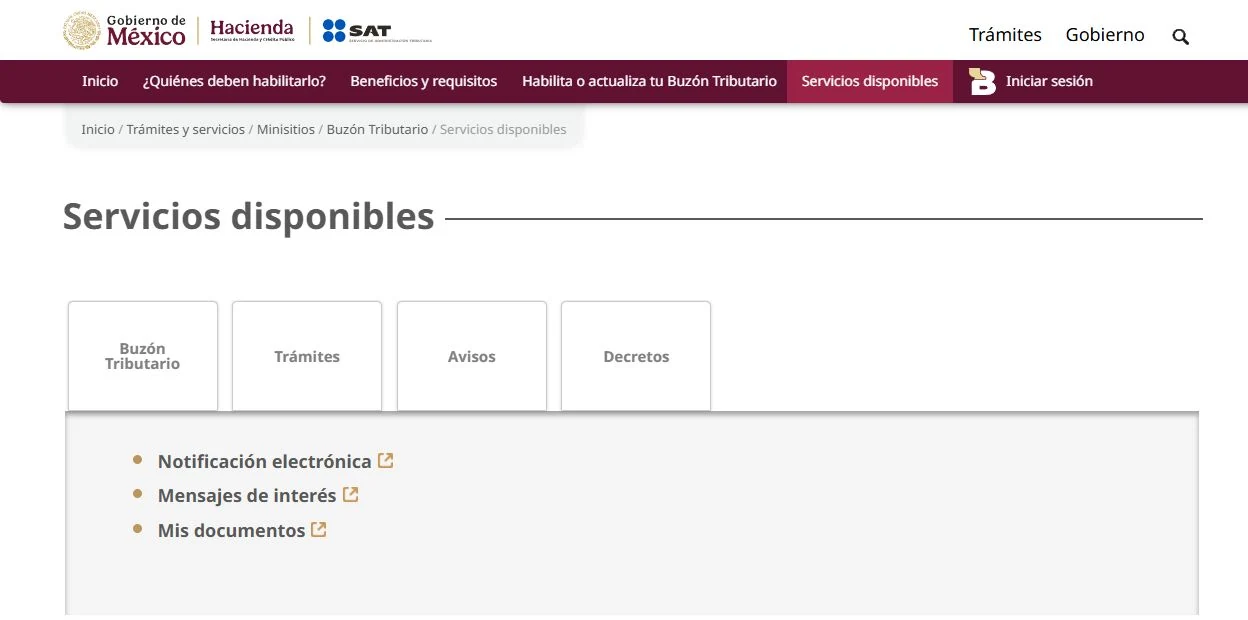
Go directly to the SAT's Buzón Tributario and retrieve the authenticated document, its notification records and subsequent official actions. An SMS alone does not replace that review. Leaving an electronic notification unopened does not indefinitely pause the notification process; its legal effects are governed by the CFF. If the deadline has already been verified as expired, record that conclusion and focus on reconstructing what happened afterward. CFF, Articles 17-K, 134 and 135.
As a recommended control, build a timeline showing notification, when it took effect, the previously verified deadline, returns, payments, responses and new official actions. Preserve original files and acknowledgments without changing or deleting them. Separate what the document alleges is missing from what your records actually establish.
Example: three files, three first actions
Assume a business owner reviews three files. In A, the response period for a formal request concerning the April return has expired, but she finds a return and bank payment receipt dated within that period. In B, a self-assessed tax remains unpaid and its payment reference has expired. In C, she received a formal enforcement order, a mandamiento de ejecución. These are working assumptions: each document must be checked against the actual record.
| File | Verified position | Evidence | First action | Do not assume |
|---|---|---|---|---|
| A | Response period expired; return and payment within that period | Formal request, filing acknowledgment and bank receipt | Match the period, reference numbers and payment; review subsequent actions and the available response route | That another identical return is needed |
| B | Expired reference and unpaid self-assessed tax | Return, previous reference and current payment status | Generate the applicable reference and verify the amount and actual payment date | That an expired reference extinguishes the debt |
| C | Formal enforcement order received | Order, assessed liability, notifications and current actions | Seek immediate legal assessment of collection and possible measures | That filing a late return stops enforcement |
In A, filing again without reconciliation can complicate the record. Check that the acknowledgment matches the requested tax regime and period, and that the payment relates to that obligation. In B, verify the amounts applicable to the current payment: inflation adjustments and surcharges may apply independently of fines. In C, the priority is to assess collection and any applicable security or suspension requirements; a late response is insufficient. CFF, Articles 21, 144 and 145.
What late correction changes legally
Article 73 provides for no fines when overdue compliance is spontaneous. However, correction is not considered spontaneous when the authority discovered the omission, or when correction follows notification of an inspection order, formal request or another action aimed at verifying compliance. Read the specific official document: not every message has that effect. Correcting an omission after a notified formal request does not support a promise that a fine will disappear. CFF, Article 73.
A practical route back into the case
- Classify the current document. Identify whether it requests a return, demands payment or forms part of enforcement; record which authority issued it.
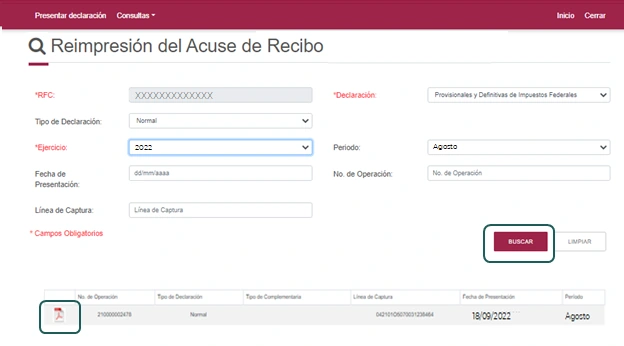
- Assemble the evidence. Gather the tax regime, period, return files, applicable XML files, acknowledgments, bank receipts and a reconciliation linking the obligation to payment.
- Identify what remains outstanding. Match each alleged omission to supporting evidence or an unfinished action; also review subsequent official documents.
- Take the appropriate action. If a return is missing, use the applicable filing route and retain the acknowledgment. If payment is missing, verify a valid reference and the current amount. If enforcement is underway, prioritize legal assessment.
- Follow up. Distinguish submission, receipt and outcome; retain the response and check the updated status without treating other deadlines as paused.
Recommended controls, not automatic legal effects
Organizing the record is a practical control. An acknowledgment of a late submission does not, by itself, establish timely acceptance, cancellation of fines or suspension of collection. Do not alter dates to create the appearance of compliance.
Frequently asked questions
Does a PRODECON complaint give me more time?
No. A complaint is not a legal proceeding and does not suspend or interrupt preclusive, prescription or statutory expiry periods, or the procedure itself. It can provide a channel to raise the authority's conduct and obtain a case assessment, but it is not a deadline extension. PRODECON: complaints and claims.
Does every overlooked notice lead to seizure?
No. Article 145 governs collection through enforcement under its conditions concerning an enforceable tax liability that has neither been paid nor secured; it does not turn every letter into an asset seizure. Identify the current document and check whether collection action already exists. CFF, Article 145.