

The mid-year tax closing does not replace the annual closing but prevents arriving in December with six months of accumulated discrepancies. July is a good time to review whether what was declared, invoiced, collected, and recorded in banks tells the same story.
Use the mid-year close as a correction window
Reconcile January through June across CFDI, banks, VAT, payroll, returns and acknowledgments. Rank differences by tax impact and reversibility, assign an owner and preserve the original evidence before correcting anything. The useful outcome is not a longer checklist; it is a dated list of exceptions that can be cleared before year-end.
What makes an interim closing useful
A good interim closing does not aim to review everything with the same level of detail. It seeks to find recurring discrepancies, risks that grow over time, and documents that can still be obtained.
Areas worth reviewing
| Area | Key question |
|---|---|
| CFDI | Do issued, canceled, and replaced CFDIs match sales and collections? |
| Banks | Does every deposit and withdrawal have an accounting explanation? |
| VAT | Does the deductible VAT have payment, XML, and relation to activity? |
| Payroll | Do receipts, IMSS, and accounting records match? |
| Filings | Are provisional payments and acknowledgments complete for each period? |
Review checklist
- Compare accrued income against issued CFDIs and bank records.
- Separate canceled, replaced, and pending collection invoices.
- Review recurring expenses without CFDI or with incorrect supplier.
- Reconcile VAT from filings against working papers.
- Confirm payroll, IMSS, and accounting use the same periods.
Findings that do require action
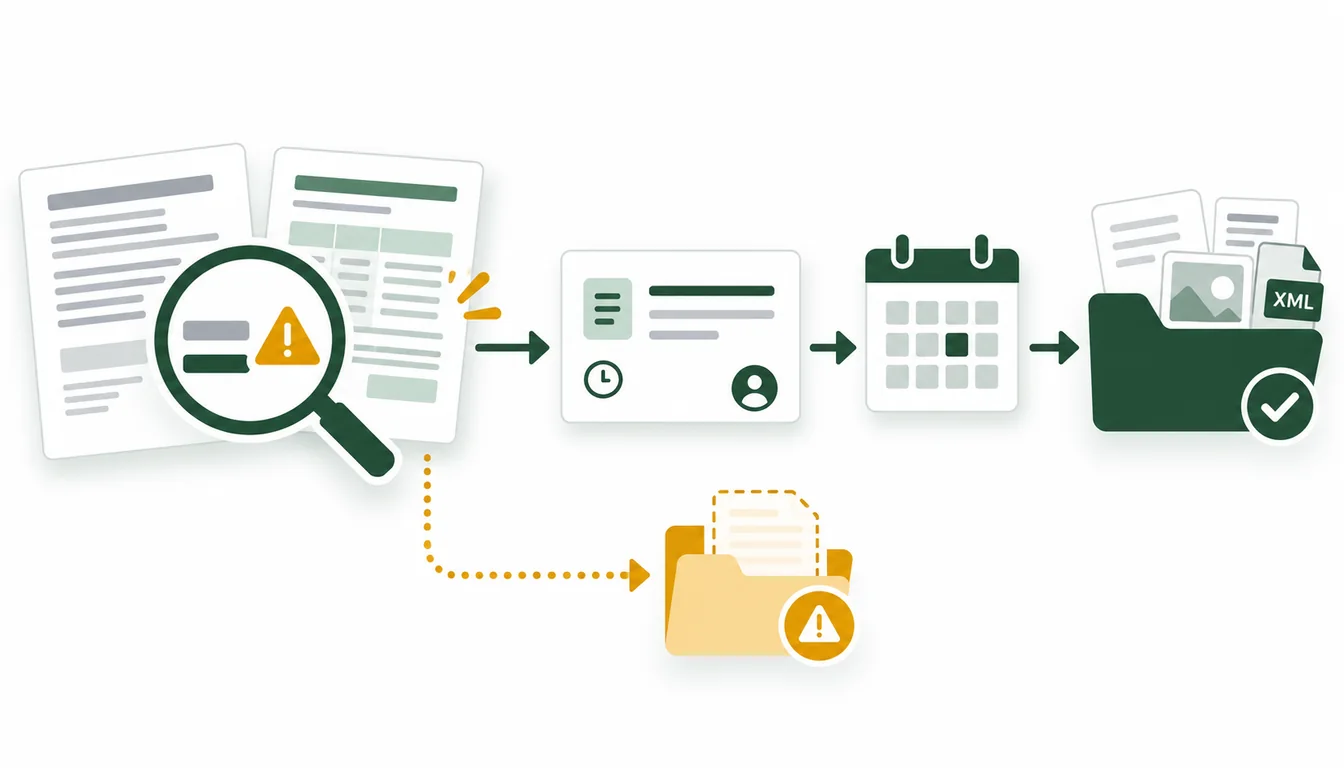
- Income discrepancies that repeat every month.
- Unsupported expenses representing significant amounts.
- Provisional payments calculated with incomplete information.
- Canceled CFDIs without evidence of replacement or acceptance.
The mid-year closing is not a full audit. It is a smart pause to avoid repeating the same mistake for six more months.
— Fintax
How Fintax can help
Fintax can perform a mid-year review focused on CFDI, banks, VAT, payroll, filings, and pending items. The deliverable should be actionable: what to correct, what to document, and what to monitor during the second half.
Official links to complete the task
Open official services from a new browser tab, confirm the taxpayer and period, and save the resulting acknowledgment or evidence with the case.