

The SAT Tax Mailbox for legal entities in Mexico is not a courtesy inbox or a secondary email account. It is a formal tax communication channel. If the company reviews it late, it can lose valuable time to clarify differences, gather documents or respond to a requirement. The useful question is not only whether the company must enable the mailbox, but who reviews it, how often, what evidence is kept and how the response is approved.
Make every review auditable
A Tax Mailbox routine should leave a minimal record even when there are no new notices: consultation date, responsible person and result. When a communication appears, add the downloaded document, stated deadline and assigned owner. This avoids depending on memory or on a single person’s access.
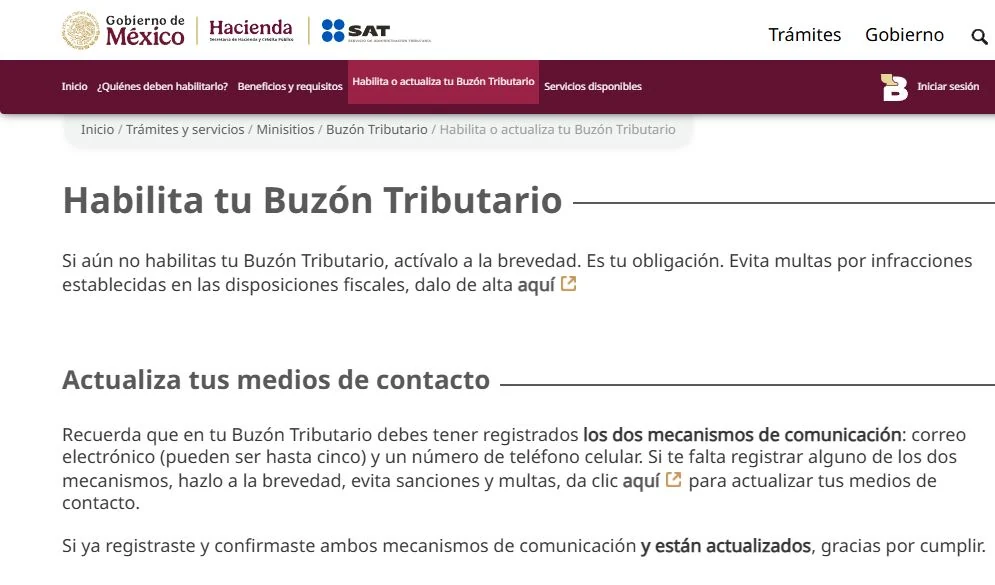
SAT explains who must enable the mailbox and which contact details are used in its Tax Mailbox microsite. From that official base, a company needs an internal process: assigned owner, documentary support, review log and escalation criteria for any communication that may trigger a deadline or require accounting analysis.
Key point
This article does not invent penalties or specific deadlines. The practical recommendation is to treat the SAT Tax Mailbox as a formal control channel because communications received there may require fiscal, documentary or administrative action.
What legal entities usually need to solve
There are usually three situations. The first is preventive: the company wants to know whether it is required to keep the mailbox enabled and how to avoid omissions. The second is operational: someone already saw a notice and needs to organize the response. The third is internal control: management wants to stop depending on a single person to monitor SAT communications. A good process should work for all three.
| Situation | First action | Risk if ignored |
|---|---|---|
| Preventive review | Confirm contact methods, owner and review frequency. | A formal communication may be seen too late. |
| Notice received | Save evidence, identify notice type and deadline. | The company may respond without support or too late. |
| Weak internal control | Create a review log and fiscal folder by period. | No one can prove who reviewed the mailbox or what was done. |
What the company should review every week
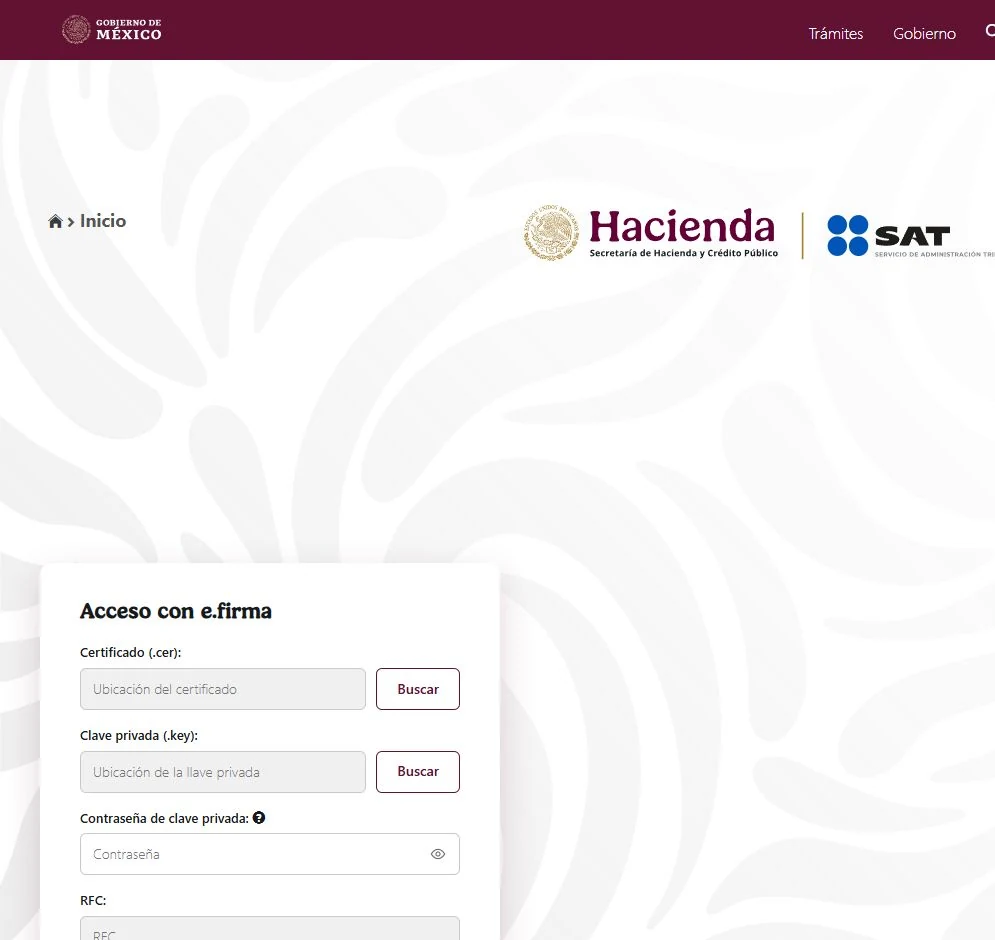
A useful review is more than logging in and checking whether there are messages. It should leave enough evidence for another person to understand what happened. For companies with active operations, recurring CFDI, payroll, suppliers and provisional payments, reviewing at least twice per week is a practical baseline.
- Confirm that registered email and phone number are active and controlled by the company.
- Check for new notifications, notices, requirements or pending communications.
- Download or save acknowledgments, screenshots and files related to each communication.
- Record review date and time, reviewer and result.
- Classify each communication: informational, clarification, requirement, discrepancy or tax-advisor matter.
- Reconcile any discrepancy against issued CFDI, received CFDI, provisional payments, returns and bank records.
- Set an internal response date before the official deadline or the operational deadline defined by the advisor.
How to read a notice without overreacting
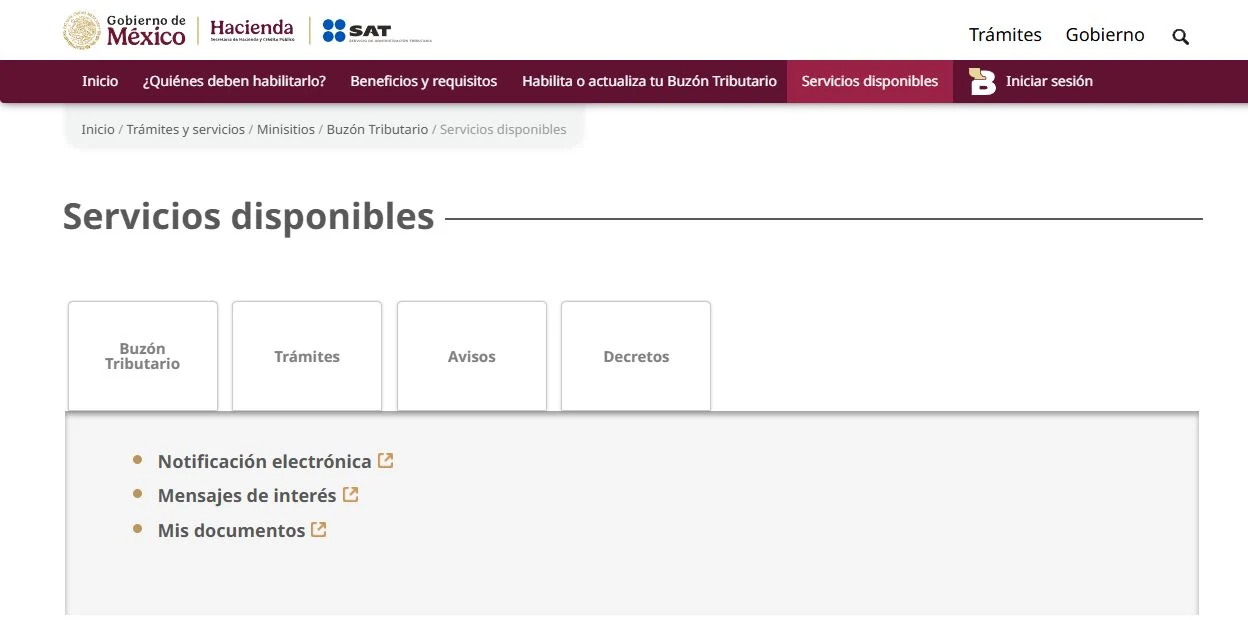
Not every SAT communication requires the same response. A common mistake is treating everything as maximum urgency or, on the opposite side, minimizing every message until issues accumulate. The first read should separate facts: issuer, RFC, period, requested document and whether an express deadline appears. From there the company decides whether to file evidence, prepare a clarification or ask the accountant to review the case before responding.
| Communication type | Recommended reading | Minimum evidence |
|---|---|---|
| Informational notice | Confirm whether action is required or only internal recordkeeping. | Download or screenshot, review date and owner. |
| Detected discrepancy | Reconcile against CFDI, returns and bank records before responding. | Workpapers, acknowledgments and reconciliation. |
| Requirement | Assign an owner and prepare attachments with tax review. | Received document, deadline, response and filing proof. |
| Contact update | Validate that the contact method is controlled by the company. | Change confirmation and internal authorization. |
Common mistakes in legal entities
- Leaving access in the hands of one person with no backup.
- Using personal emails from former employees or outside providers.
- Keeping only loose screenshots, without acknowledgments or folders by period.
- Responding to a tax discrepancy before reconciling CFDI, provisional payments and bank records.
- Not escalating communications that may affect cash flow or create a tax contingency.
- Treating a monthly review as sufficient after operational time has already been lost.
Recommended response process
- Log the communication with review date, RFC, period, notice type and owner.
- Download evidence and store it in a fiscal folder with a consistent naming convention.
- Define whether the response is documentary, accounting, tax-related or administrative.
- Reconcile the communication against tax returns, CFDI, payments, bank records and workpapers.
- Prepare a response with clear attachments; avoid improvised explanations without support.
- Submit the response through the appropriate channel and save final acknowledgment.
- Close the case with an internal note: what was answered, who approved it and what follow-up remains.
The strongest response to a tax communication is not the fastest response. It is the response supported by evidence, traceability and accounting judgment.
— Fintax
Example of a simple review log
The log does not need to be complex. It should be clear enough for management, accounting or an outside advisor to reconstruct the case without relying entirely on the person who logged into the portal. Each review should leave a minimum trace and each communication should have an owner.
| Field | Example use |
|---|---|
| Review date | Day and time when the mailbox was checked. |
| Owner | Person who reviewed and backup owner if applicable. |
| Communication type | Notice, requirement, discrepancy, update or no messages. |
| Affected period | Month, fiscal year or related return. |
| Action taken | Filed, reconciled, escalated, answered or pending follow-up. |
Who should be informed inside the company
Not every communication needs to reach the CEO, but it should not remain locked inside accounting either. A discrepancy that may affect payments, cash flow or fiscal reputation should be escalated. A contact update may be handled operationally. A requirement with documents should involve whoever controls the evidence: administration, finance, payroll, purchasing or sales.
- Management: when there is relevant economic, reputational or compliance risk.
- Finance: when the communication affects payments, payment lines, bank records or cash flow.
- Payroll: when it involves payroll CFDI, withholdings or employees.
- Sales or invoicing: when the difference comes from issued, cancelled or replaced CFDI.
- Purchasing or administration: when contracts, deliverables or supplier support are needed.
Practical case: discrepancy from cancelled CFDI
Suppose the legal entity receives a communication related to income discrepancies. Before responding, the team should review whether there were cancelled CFDI, replacements issued in another period, credit notes or duplicated invoices. The answer should not simply say that accounting is correct. It should include a reconciliation explaining the difference, the folios involved and the evidence of cancellation or replacement. That work reduces the risk of sending an incomplete explanation.
Frequently asked questions
Do all Mexican legal entities need to review the SAT Tax Mailbox?
The company should start from SAT's official rule on who must enable the mailbox and maintain contact methods. In practice, any legal entity with active tax operations should treat the mailbox as a permanent control channel.
How often should it be reviewed?
For an active company, once a week can be weak. A practical baseline is at least twice per week, with additional reviews after filing dates, changes in obligations, relevant transactions or significant CFDI activity.
What if there are no messages?
A no-message review is still useful if it is recorded. The log supports internal control and prevents the company from relying on memory or isolated screenshots.
How Fintax can help
Fintax can turn the SAT Tax Mailbox into an organized fiscal process: periodic review, classification of communications, reconciliation of discrepancies and preparation of supported responses. The objective is not to log in out of habit; it is to reduce risk and respond with complete information when it matters.
Official links to complete the task
Open official services from a new browser tab, confirm the taxpayer and period, and save the resulting acknowledgment or evidence with the case.