

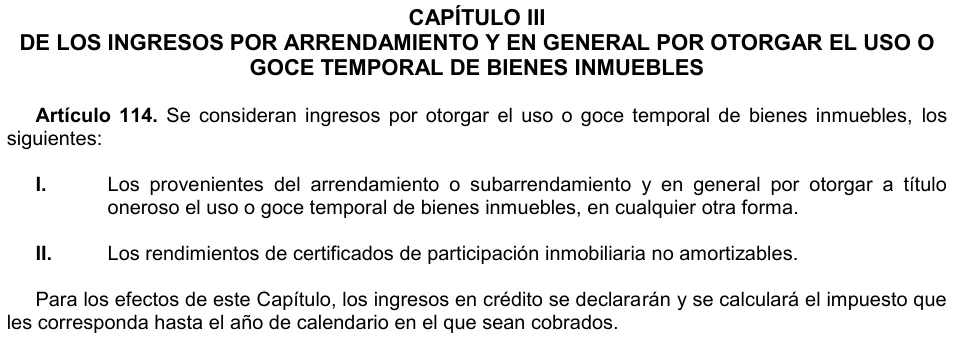
If you have collected rent for months without declaring it, start by reconstructing what happened. Adding rental activity to your RFC now addresses your registration record, but does not resolve earlier returns. Article 114 of Mexico's Income Tax Law identifies income from granting temporary use or enjoyment of real property as rental income and provides that income payable on credit is declared when collected. That distinction helps you organize the past without confusing amounts agreed with amounts received.
Two separate tasks: registration and past compliance
Publicación de InstagramMostrarOcultar
Original Fintax Instagram publication about tax registration for property owners receiving rent.
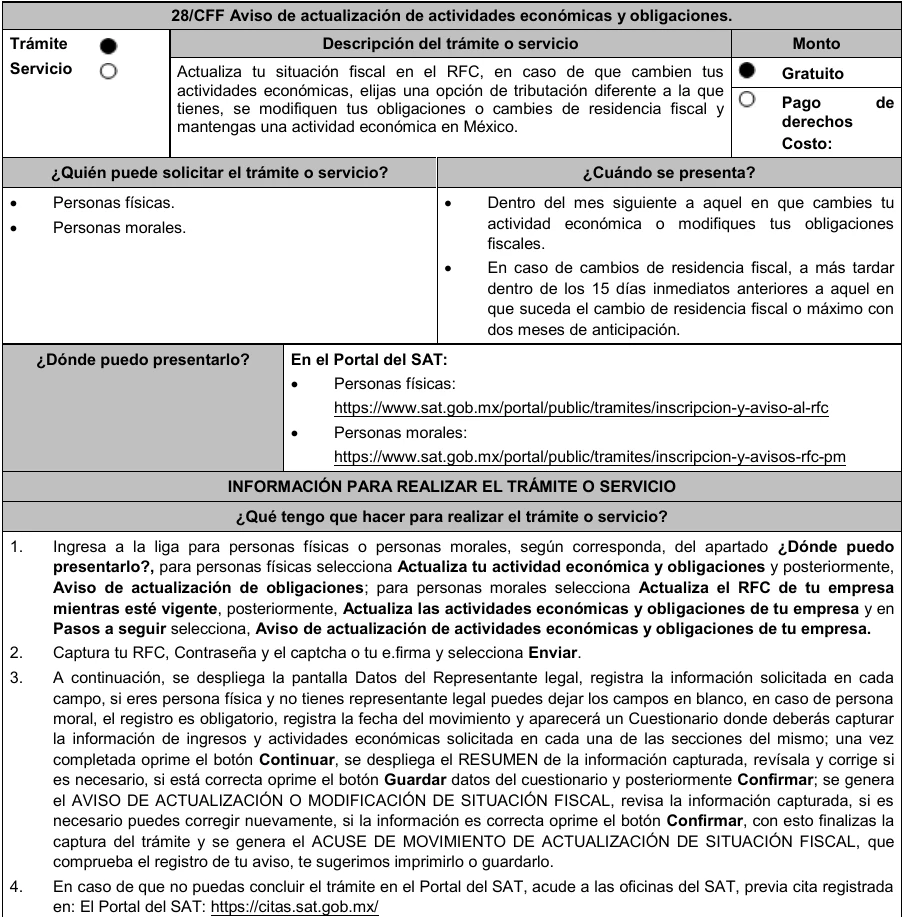
If you already have an RFC for employment income, review an update to your registered activities and obligations rather than treating this as first-time registration. Procedure 28/CFF in Annex 2 of the 2026 Miscellaneous Tax Resolution, pages 76 and 77, covers the questionnaire, the effective date of the change, and generation of the update notice and acknowledgment. The date should reflect what actually happened, not be chosen to conceal earlier months.
The notice and acknowledgment document the update. They do not replace tax returns or prove payment of earlier taxes. Articles 114 through 118 of the Income Tax Law also provide no automatic exemption for rent collected before registering the activity. Deductions have conditions: assembling expense records does not make every expense deductible.
Build a chronology supported by records
As a recommended control, identify the owner or person legally entitled to receive the income. If the property is jointly owned, or responsibility for reporting is unclear, obtain advice before assigning all collections to one RFC. Then gather the lease, amendments, bank statements, cash receipts, available CFDI tax invoices, and filed returns. Keep the originals and work from copies.
| Information by period | Evidence to compare | Recommended control |
|---|---|---|
| Agreed rent and collection date | Lease, bank statement or receipt | Separate amounts due from amounts received |
| Deposit or security payment | Contract clause and bank transaction | Review its nature before classifying it as rent |
| Existing CFDI | Invoice file and details | Match it to the lease and collection; flag discrepancies |
| Tax return and payment | Filing acknowledgment and payment evidence | Distinguish an unfiled return, an error and an unpaid balance |
| RFC activity change | Update notice and acknowledgment | Compare the recorded date with the actual chronology |
Do not automatically label every bank credit as rent: it may be a refundable security deposit or another payment. Document its nature and any later application. Your worksheet should separate agreed rent, collection, CFDI, return, and payment. This separation is a working control; the legal rule for income payable on credit appears in article 114 of the Income Tax Law.
Example: four collections before an RFC update
Assume a property owner already has an RFC for employment income, rents out a house starting in January, and receives one monthly payment from January through April. She does not collect the agreed rent for May, June, or July. In August, she adds rental activity. The lease and bank statements support those dates; the tax has not yet been determined.
Her file should show four collections, each in its respective period, and three months of rent still awaiting collection. Under article 114 of the Income Tax Law, income payable on credit is declared when collected. The August update does not erase January through April. This chronology allows a review of the relevant returns and corrections without using August as an invented starting date.
A practical sequence for addressing the backlog
- First check for any notice, formal request or action by the tax authority. Keep the document and have it assessed before filing.
- Complete the period-by-period worksheet and resolve differences between the lease, collections and supporting records.
- Confirm whether you need initial registration or an RFC update, using the actual effective date.
- Identify outstanding returns and necessary corrections. Review lawful corrective CFDI issuance; do not fabricate invoices with false dates.
- Submit the appropriate filings and retain acknowledgments and payment evidence linked to each period.
Voluntary compliance does not cancel the tax debt
Articles 17-A and 21 of the Federal Tax Code provide for inflation adjustments and late-payment charges on taxes paid late. Article 32 governs amended returns under specific conditions. Article 73 provides relief from fines for spontaneous compliance, subject to exceptions; it does not eliminate the tax or guarantee that treatment if the authority has already intervened.
Review these consequences against your actual file and the Federal Tax Code, articles 17-A, 21, 32 and 73. This is why any existing communication should be assessed before deciding how to file.
Frequently asked questions
Does the update acknowledgment prove everything is resolved?
No. It documents the RFC change under procedure 28/CFF. Check returns and payments for each earlier period separately.
What if cash receipts are missing?
Reconstruct collections using the lease, messages, contemporaneous records and tenant confirmations. Mark what is supported and what still needs clarification. Do not invent old receipts: take the discrepancies for review before declaring the income.