

For an individual under RESICO, adding up bank deposits or adding up invoices can produce two different, incorrect tax bases. A deposit may arrive after ISR income tax has been withheld, while an issued invoice may still be unpaid. The bridge between those records is to identify collected income before withholding, separate VAT and recognize each transaction once.
Three amounts that must stay distinct
Publicación de InstagramMostrarOcultar
Original Fintax Instagram publication about invoice and receipt controls under RESICO.
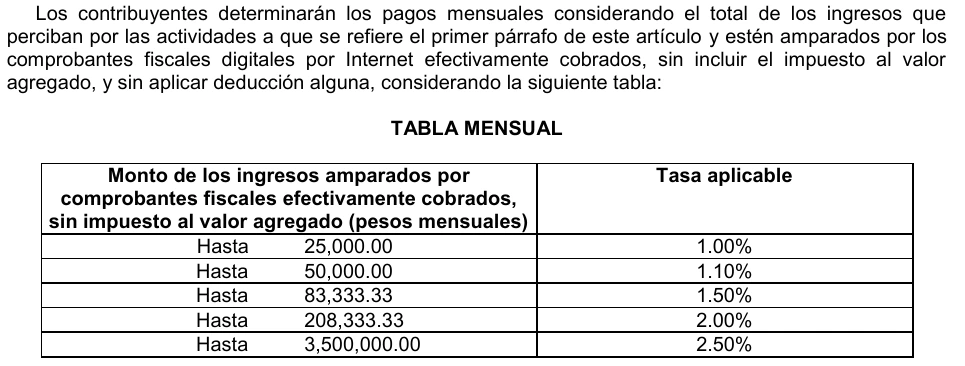
The monthly RESICO income tax base consists of income covered by the regime that has actually been collected and is supported by CFDI electronic tax invoices, excluding VAT and without income tax deductions. An unpaid invoice therefore does not enter the base merely because it was issued. Nor is the net deposit sufficient when it includes VAT or reflects withholding. The statutory starting point is Article 113-E of the Income Tax Law, LISR.
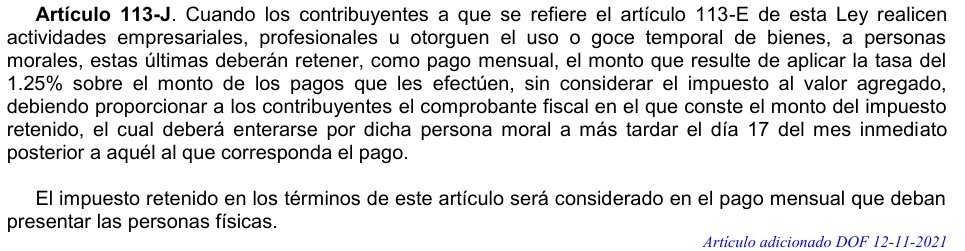
When a legal entity pays an individual under RESICO for business activities, professional services or rentals, it must withhold 1.25% of the payment excluding VAT. That withholding is taken into account in the individual's monthly tax payment. It does not turn gross income into net income or replace the applicable monthly rate. These are separate functions under Articles 113-E and 113-J of the LISR.
Worked example: from bank deposits to the monthly base
Assume a merchant already qualifies for RESICO and makes these domestic sales of ordinary taxable goods during October 2026. There are no other receipts or adjustments. The general 16% VAT rate applies; these ordinary sales do not fall within VAT withholding cases. This does not mean every transaction with a legal entity is free of VAT withholding: the transaction and statutory conditions matter under Articles 1 and 1-A of the VAT Law, LIVA. All amounts are in Mexican pesos.
| Transaction | Amount excluding VAT | VAT | ISR withheld | Bank deposit | Collected income excluding VAT |
|---|---|---|---|---|---|
| Paid consumer sale | 30,000 | 4,800 | 0 | 34,800 | 30,000 |
| Paid sale to a legal entity | 30,000 | 4,800 | 375 | 34,425 | 30,000 |
| Unpaid invoice | 10,000 | 1,600 | 0 | 0 | 0 |
| Total | 70,000 | 11,200 | 375 | 69,225 | 60,000 |
The reconciliation bridge is: 69,225 deposited + 375 ISR withheld − 9,600 VAT collected = 60,000 collected income excluding VAT. Adding back the 375 reconstructs the receipt before withholding; it does not create a second item of income. The 1,600 VAT on the unpaid invoice is also outside the example's collected VAT. The actual-collection distinction is supported by Article 1-B of the LIVA.
For monthly income of 60,000, the Article 113-E table assigns 1.5%, within the row whose upper limit is 83,333.33. Apply it to the entire 60,000, not in marginal brackets: 60,000 × 1.5% = 900. Then account for the verified 375 withholding: 900 − 375 = an illustrative ISR balance payable of 525. The 1.25% withholding rate and the 1.5% monthly rate are not interchangeable. See Articles 113-E and 113-J of the LISR.
Collected VAT is not the final VAT payable
The 9,600 represents only VAT collected in this example. It is not a calculation of final VAT payable. This reconciliation reconstructs the income tax base and the illustrative ISR balance.
Recommended controls before filing
The following steps are recommended controls, not additional statutory requirements. Their purpose is to leave a verifiable explanation for each difference between invoicing records, bank activity and the tax return.
- Create one row per transaction with the CFDI UUID, customer, payment date, income excluding VAT, VAT, withheld ISR and net deposit. Link the bank payment evidence to that row.
- Separate collected amounts from outstanding invoices. If a deposit combines transactions, break it down before calculating; retain evidence identifying each receipt.
- Verify that the withholding customer is a legal entity and check the supporting documentation. Track the example's 375 in both the bank bridge and the ISR calculation without subtracting it twice from the tax.
- If a payment complement is missing or evidence conflicts, clarify the transaction. Do not automatically exclude income actually collected because documentation is missing.
- Review cancellations and replacement invoices: link both CFDIs to avoid duplicating the same transaction. Do not force a cancellation merely to make figures agree.
- Save the comparison between your records, prefilled information and the filed return, along with filing acknowledgments. Document the reason for each corrected difference.
Rule 3.13.7 of the 2026 Miscellaneous Tax Resolution provides for definitive monthly payments by individuals under RESICO using prefilled information from income, expenditure and payment CFDIs. The practical recommendation is to compare that information against actual receipts rather than accept the prefill without review.
Frequently asked questions
Can I calculate ISR on the amount received in my bank account?
Not directly if the deposit includes VAT or has been reduced by withheld ISR. First reconstruct collected income excluding VAT under Article 113-E, as shown in the example's reconciliation bridge.
Does an unpaid invoice increase the monthly tax base?
Not simply because it was issued. Article 113-E requires income actually collected. Keep the invoice in your outstanding-invoice records and link it to the payment when collection occurs.