

You open the RESICO return and SAT has already filled in an income amount. Before accepting it, compare it with what you received that month. Unpaid invoices, cancellations or customer withholdings may need a closer look.
The official monthly and definitive RESICO return service covers monthly ISR and definitive VAT. SAT uses CFDI information for the prefill. An incorrect payment method, payment complement or withholding can therefore carry into the form.
Close the records before opening the portal
Match CFDI to bank movements and payment complements. Then check ISR, VAT and withholdings against the working papers. Store the acknowledgment, payment line and bank receipt in the same period file.
| Monthly review | Risk if skipped |
|---|---|
| Income and payment CFDI | Recording a collection in the wrong month or omitting it |
| Withholdings | Overpaying or creating a difference with a legal-entity customer |
| VAT | Misstating output, creditable or withheld VAT |
| Acknowledgments | Losing proof of what was filed and when |
The collection month determines ISR
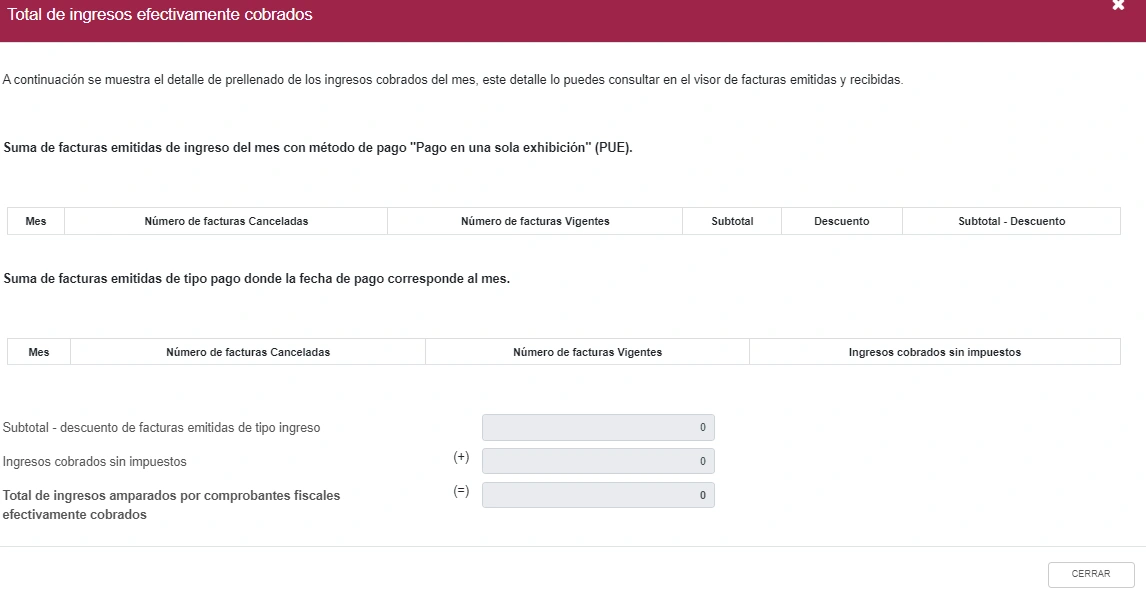

For individuals in RESICO, ISR is calculated on income supported by CFDI and actually collected. If you invoice in March and receive payment in April, identify the April payment and its supporting record. The invoice date alone does not determine the month to report the income.
SAT's RESICO invoice viewer shows totals from active CFDI used to prefill ISR and VAT returns. Compare those totals with the XML files and bank statements. The viewer does not replace that reconciliation.
Practical example
Assume you issue a PPD invoice for MXN 50,000. The customer pays MXN 30,000 in March and MXN 20,000 in April. The issuer must generate a payment CFDI for each collection. The March close reviews the MXN 30,000 complement, and the April close reviews the complement for the remaining MXN 20,000.
If the invoice used PUE because full payment was expected during March but the money did not arrive by month end, changing a number in the return is not enough. Rule 2.7.1.39 of the 2026 Miscellaneous Tax Resolution requires the issuer to cancel that CFDI, issue a new one using PPD and generate the applicable payment complements.
| Monthly movement | Period to review | Evidence to keep | Common mistake |
|---|---|---|---|
| Invoice issued and fully collected in the same month | Collection month | CFDI, bank deposit and customer reference | Accepting the prefill without matching the deposit |
| PPD invoice still unpaid | Keep it in receivables until collection | CFDI and accounts-receivable detail | Treating the invoice as collected income |
| Partial payment | Allocate each collection to its actual month | Bank movement, invoice balance and payment CFDI | Reporting the full amount in the first month or losing the remaining balance |
| Client applied a withholding | The month reflected by the payment and supporting CFDI | Withholding data, CFDI, bank receipt and working paper | Missing a withholding because it was stamped incorrectly or appeared late |
To check those payments:
- Identify CFDI issued during the month.
- Relate each collection to the invoice UUID.
- Check the installment number, prior balance, amount paid and remaining balance.
- Match each payment CFDI to the bank statement.
- Correct the CFDI that caused a wrong prefill before filing.
What to review before filing

Save the calculation you compared with SAT's form and the records you used. They will help you explain an amount or correct the return later. Check the following before filing.
1. Issued CFDI against bank collections
Compare invoices, payment CFDI and deposits. Separate advances and transfers that are not revenue. For cash collections, retain the record that identifies the transaction and its CFDI.
2. ISR and VAT withholdings
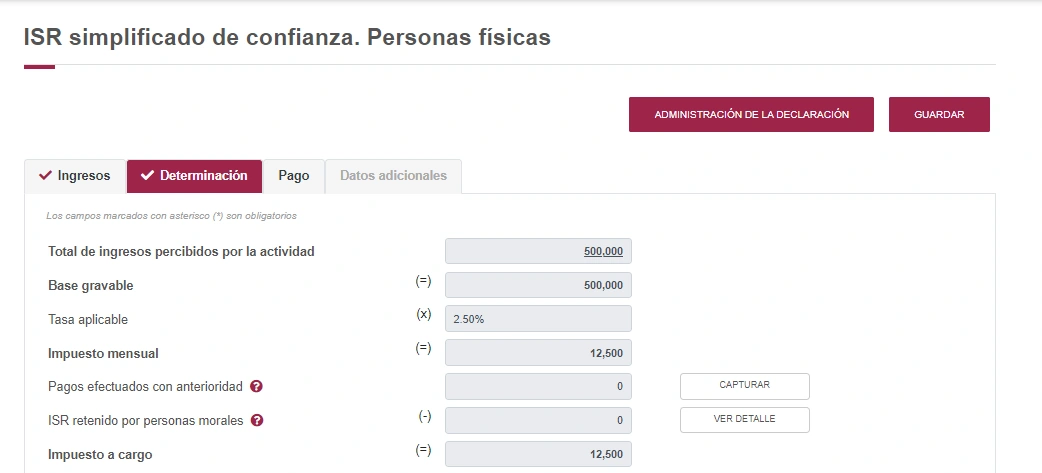
When a legal entity withholds ISR or VAT, check the RFC, tax base, rate and amount in the CFDI. Then compare the withholding with the prefill. Ask for a correction before treating an incorrect receipt as a credit.
3. VAT charged, creditable and withheld
RESICO changes the ISR calculation. It does not remove VAT. Classify transactions as taxable, zero-rated, exempt or outside the scope of VAT. Confirm that creditable VAT meets the requirements and relates to amounts actually paid.
4. Prior returns and amended filings
Correct the CFDI or return for the period in which the difference began. For an amended return, retain the former acknowledgment, new acknowledgment, working paper and proof of any additional payment.
Common mistakes
These routine errors explain many discrepancies:
- Accepting pre-filled data without comparing it to bank records.
- Treating a PPD invoice as collected without checking the payment CFDI.
- Failing to invoice income that was already collected.
- Forgetting payment complements.
- Accepting a withholding with the wrong RFC, base or amount.
- Not saving acknowledgments, payment lines and proof of payment.
If invoices are piling up, record collections during the month instead of reconstructing them near the deadline. Note the invoice, date and amount for each payment. As volume grows, an accounting system can help match transactions and identify differences for review.
When to ask for help
Ask for help when you have partial payments, several bank accounts or withholdings that do not match the prefill. The same applies when you cannot explain a difference among the viewer, XML files and working papers before the deadline.
The Fintax accounting service includes the CFDI, collection, bank and return review in the monthly close. The delivery should include the calculation, acknowledgment and open items carried into the next period.
Frequently asked questions
When is the monthly RESICO return filed?
By the 17th day of the following month. SAT also publishes additional business days based on the sixth numeric digit of the RFC under the applicable tax benefits decree.
Can I accept SAT's pre-filled data?
Use it as a base and compare it with XML files, payment complements, bank statements and withholdings. The prefill may be incomplete when a receipt is canceled, incorrect or not yet available in the viewer.
What if SAT shows income I have not collected yet?
Check the payment method. For PPD, confirm that the prefill uses payment CFDI from the period. If the invoice used PUE and full payment did not arrive within the month, correct the receipt under rule 2.7.1.39 before filing.
Do I need to file if I had no income?
Check the active obligations in your tax status certificate and in the application. Having no income does not by itself remove a registered monthly filing duty.
What to save after submitting
The filing is not complete when the portal accepts it. Save the return, acknowledgment, payment line, payment proof and the reconciliation used to prepare it in one monthly folder. If a figure changes later, add a short note that identifies the corrected source instead of replacing the original evidence.