

When you open a business, recording transactions does not establish that the month is closed. You need to reconstruct what was sold, how much was collected, what remains outstanding and what was reported. A 90-day plan helps you establish that sequence, repeat it and hand it over to whoever handles the accounting, without relying on the owner's memory.
The 90 days are an operational recommendation
They are not a tax grace period. Obligations and deadlines depend on the activities, tax regime and reporting period. Any actual deadline takes priority over this internal schedule.
Publicación de InstagramMostrarOcultar
Original Fintax Instagram publication about accounting errors when starting a business.
What the law requires and what you should control
Mexico's Federal Fiscal Code, or CFF, addresses RFC obligations in Article 27, accounting in Article 28, tax invoices in Articles 29 and 29-A, and filing returns in Article 31. Their application must be assessed for the particular business. Assigning responsibilities, reconciling cash and bank transactions, and testing traceability are recommended controls to fulfill and substantiate those obligations, rather than additional legal requirements.
Days 1 to 15: build a record for each transaction
- Build the calendar from the RFC's actual obligations and applicable deadlines. Assign preparation, review and filing responsibilities.
- Create separate folders for issued and received XML files. Link each transaction to evidence of delivery, collection or payment.
- Record cash separately from bank transactions: date, amount, purpose and related transaction. Identify owner transfers too.
- Establish authorized access without sharing passwords indiscriminately. Assign someone to check the Buzón Tributario and handle notices.
When invoicing, validate the recipient's RFC, name, postal code, tax regime and CFDI use against the SAT's CFDI 4.0 information. A tax status certificate, or constancia de situación fiscal, is not mandatory for issuing an invoice. Keep the XML file alongside any PDF used for convenient viewing.
Notifications should not wait until month-end or day 90. The SAT's Buzón Tributario needs a separate response process: consult the authenticated official document and retain its acknowledgment to establish what requires attention and when.
Days 16 to 30: verify the first close
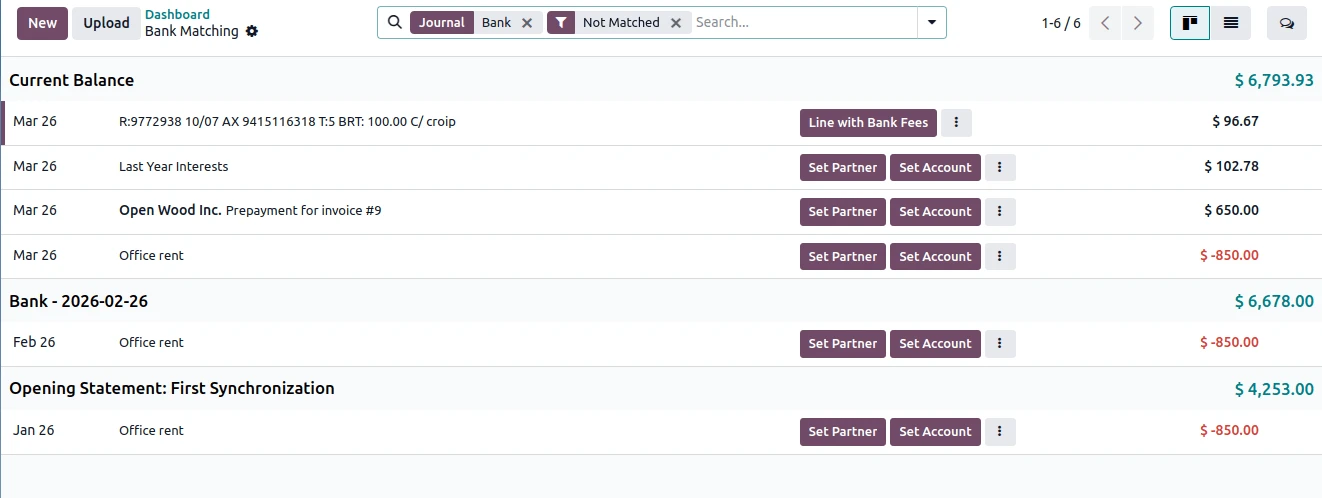
Assume a workshop opens on October 1 with its tax activities already registered. For comparison, the example's amounts exclude VAT. During October it invoices MXN 16,000, receives MXN 12,000 from customers through the bank and MXN 2,000 in cash, leaving MXN 2,000 outstanding. The owner also transfers MXN 8,000 from another account they own, with documentation identifying the source.
| October transaction | Amount | Treatment in the control records |
|---|---|---|
| Invoiced sales | MXN 16,000 | Link CFDI to the sale and collections |
| Customer collections through the bank | MXN 12,000 | Reconcile against bank transactions |
| Customer cash collections | MXN 2,000 | Reconcile against the cash log |
| Outstanding customer balance | MXN 2,000 | Keep in accounts receivable |
| Owner transfer | MXN 8,000 | Document separately; do not classify as a sale |
Customer collections total MXN 14,000. Checking the bank alone would miss MXN 2,000 in cash. The difference between MXN 16,000 invoiced and MXN 14,000 collected does not automatically establish omitted income: here it represents the outstanding balance. Check that the CFDI correctly reflects the transaction, including the PPD payment method where applicable. The owner's transfer needs evidence; identifying it this way does not, by itself, settle its tax treatment.
- Gather every collection and payment channel; reconcile bank transactions, cash and outstanding balances.
- Investigate discrepancies and CFDI errors. Editing a PDF does not correct the XML; any cancellation or replacement must follow applicable rules.
- Apply the recognition timing required by the tax regime, retaining collection dates and supporting records.
- Prepare and review the return; file and pay when applicable. Verify the filing acknowledgment and that the payment was applied to the correct period.
Days 31 to 90: repeat and hand over the evidence
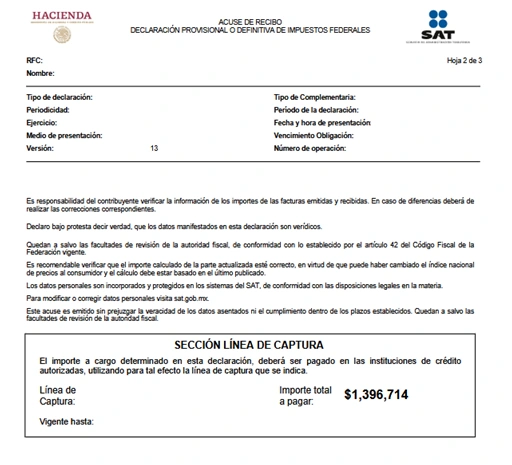
In the second month, the workshop introduces a daily cash log and reconciles it at closing: date, receipt, customer, amount and related CFDI. Between days 60 and 90, back up the records and test one complete transaction, from its supporting document through to the return and, if tax was payable, the corresponding bank payment evidence.
The handover should include issued and received XML files, transaction support, cash records, bank records, returns, acknowledgments and applicable payments, identified by date and period. Add an unresolved-items list with an owner and next action. If a document is missing, request it from the relevant issuer, customer or bank and verify that it matches the transaction before filing it.
Frequently asked questions
Can I skip returns if there was no activity?
Do not assume so. Check the obligations applicable to the RFC, regime and period; having no transactions does not establish an automatic exemption. Filing is governed by Article 31 of the CFF.
Are PDFs enough for the records?
They do not replace CFDI XML files. Keep both if the PDF makes review easier, but link the XML to its transaction and payment support.
Does a prepared return prove compliance?
A draft does not prove filing. The acknowledgment establishes submission but does not replace bank evidence of tax payment. When payment is required, retain both and verify the period and payment application.