
Hiring accounting and tax services in Mexico should not begin with the question 'what is the monthly fee?' The better question is what your business needs to solve: monthly compliance, accounting order, taxes, payroll, invoicing, SAT requirements, management reporting or all of the above. If the scope is unclear, any price becomes hard to evaluate.
A good accounting service does not only file tax returns. It should help you understand what is being recorded, what risks exist, what information is missing and which decisions should be made before SAT, a bank, a partner or an investor asks for explanations. Useful accounting is a control tool, not just a compliance task.
What a basic but serious accounting service should include
- Periodic accounting records with clear criteria and supporting documents.
- Bank reconciliation to explain inflows, outflows, transfers and pending deposits.
- Review of issued and received CFDI, including cancellations and replacements.
- Calculation and filing of applicable monthly or periodic returns.
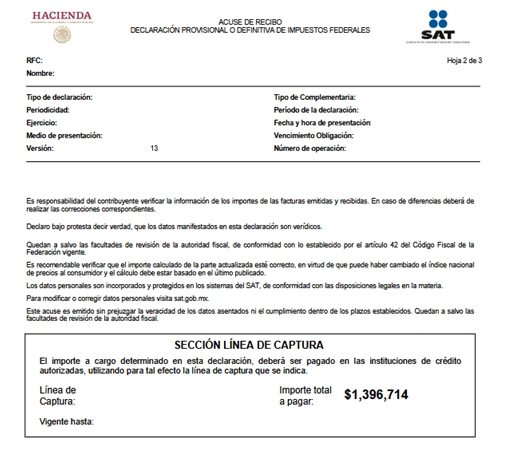
- Tax report, acknowledgments, payment lines and payments made.
- Alerts about discrepancies, missing documents or movements that require explanation.
- Organized storage of workpapers, acknowledgments and evidence.
Tax services that add value
Tax advisory begins where accounting intersects with obligations, deductions, withholdings, regimes and documentation criteria. A provider that only captures information may be insufficient if your business has relevant operations, payroll, frequent suppliers, foreign payments, fast growth or SAT requirements.
| Service | What it should deliver | Question to ask |
|---|---|---|
| Monthly compliance | Returns, acknowledgments, workpapers and explanation of differences. | What do you review before filing? |
| Prudent tax planning | Scenarios and supported recommendations, not aggressive promises. | What risks do you document? |
| SAT requirements | Analysis, support file and traceable response. | Who prepares and who validates the response? |
| Payroll | CFDI, reconciliation, withholdings and incident control. | How do you reconcile payroll against bank records? |
| Management reports | Income statement, cash flow and relevant findings. | What decisions can I make with this report? |
How to compare providers beyond price
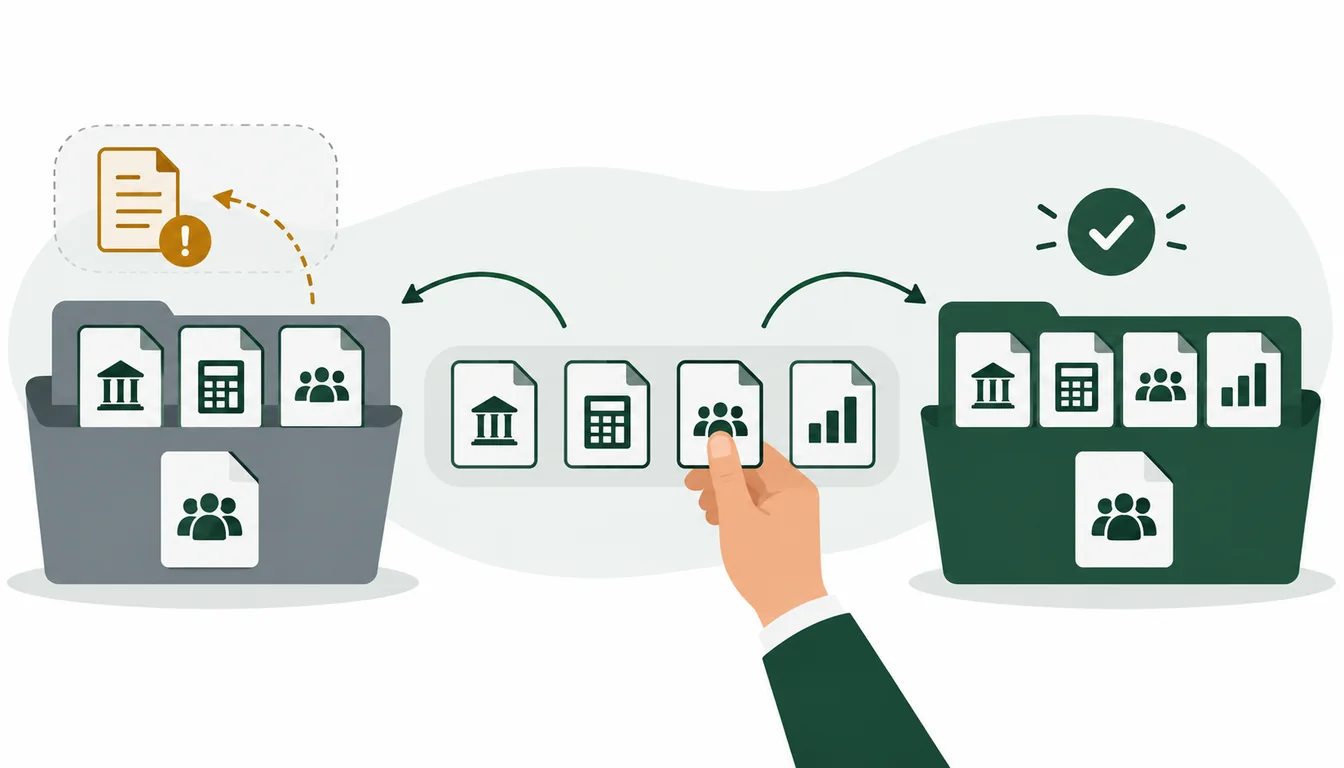
Two firms can offer 'monthly accounting' and deliver completely different work. One may send only the payment line; another may deliver a report, acknowledgments, reconciliations, pending-items log and risk explanation. Before choosing, compare scope, frequency, responsible owners, response times and evidence quality.
- Ask for a sample monthly report without sensitive data.
- Ask how they receive and validate documents.
- Confirm whether they review CFDI or only record what you send.
- Clarify whether payroll, returns, notices, requirements and advisory are included.
- Define what happens if SAT sends a notice or a discrepancy appears.
- Ask which tools they use for tracking and document storage.
Warning signs before hiring
Be careful with promises that sound too convenient
If a provider promises that you will always pay less tax without reviewing the operation, or says documents are not needed to support deductions, they are likely selling a risky expectation.
- They do not explain monthly deliverables.
- They do not ask for bank statements, CFDI or supporting documents.
- They do not make acknowledgments or workpapers available.
- They respond only when there is an emergency.
- They do not distinguish accounting, tax, payroll and advisory work.
- They do not document criteria or recommendations.
- They speak only about savings, not risks.
Information to prepare before requesting a proposal
The proposal will be more accurate if you provide basic business context. You do not need to share everything in the first conversation, but the provider needs enough information to understand volume, obligations and complexity.
- RFC and tax regime.
- Main activity and type of clients.
- Approximate number of issued and received CFDI per month.
- Number of bank accounts and transaction volume.
- If you have employees, number of workers and payroll frequency.
- Current obligations and pending returns if any.
- Recent problems: penalties, requirements, discrepancies, delays or document disorder.
Quick decision matrix
| If your business needs... | Look for a service that includes... |
|---|---|
| Avoiding delays | Tax calendar, owners and filing confirmation. |
| Organizing information | Reconciliations, document folders and clear reports. |
| Reducing errors | Review of CFDI, bank records, payroll and workpapers. |
| Making decisions | Management reports and explanation of impacts. |
| Responding to SAT | Tax analysis, support file and traceability. |
How to measure whether the service is working
An accounting service can be friendly and still fail to solve the real problem. Define simple indicators from the beginning. They do not need to be sophisticated metrics; they only need to show compliance, order, visibility and response capacity. If after three months you still lack acknowledgments, reports or clarity on pending items, the service needs adjustment.
| Indicator | Good sign |
|---|---|
| Returns | They are filed on time and acknowledgments are available. |
| Pending documents | There is a clear list and it decreases each month. |
| Reconciliations | Bank records, CFDI and accounting can be explained without relying on memory. |
| Reports | Management understands taxes, cash flow and main risks. |
| Response | Questions are answered with judgment and evidence, not only short messages. |
What should be written in the proposal
Before hiring, ask the provider to state scope, deliverables, calendar, client responsibilities and provider responsibilities. The proposal should also say what is quoted separately: SAT requirements, cleanups, extraordinary payroll, procedures, tax opinions or reconstruction of delayed accounting. That clarity prevents conflicts and makes the service easier to evaluate with facts.
Practical case: a small business that grew quickly
A business may start with a few invoices and simple accounting, then grow into employees, multiple bank accounts, recurring purchases and corporate clients. At that point, the service that worked before may become insufficient. The signal is not only more workload; it is missing reconciliations, reports, payroll control and tax explanations. Before changing providers, define the new level of control the business needs.
Priorities for the first 90 days
When hiring a new service, the first 90 days should stabilize the operation. First review obligations and delays. Then organize documents, bank records and CFDI. After that, improve reporting for management. Trying to solve planning, savings, advanced reports and historical cleanup at the same time usually fragments the work. A good provider should propose a realistic sequence.
That sequence also protects the provider relationship. If both sides know what is reviewed first, what remains pending and what counts as extra work, the conversation stops revolving around emergencies and starts being measured by concrete progress.
The result is more predictable accounting and less dependence on last-minute rescues.
That is usually where a service starts creating visible management value.
Frequently asked questions
What is the difference between accounting and tax advisory?
Accounting records and organizes the operation. Tax advisory interprets obligations, risks and tax decisions. In a healthy company, both work together: taxes are calculated better when accounting is organized.
Can the cheapest service work?
It can work if the scope is limited and the business is simple. The problem appears when the low price excludes review, reconciliation, support or answers to questions. Compare deliverables, not only the monthly fee.
How often should I receive reports?
At minimum, after each monthly close or filing period. If the business is growing or cash flow is sensitive, more frequent reports on taxes, bank records and pending items are useful.
How Fintax works
Fintax structures accounting and tax services around compliance, evidence and clarity. Before promising results, we review operations, documents, obligations and risks. The service should not stop at filing returns; it should help the business understand and control its tax information.
Turn the proposal into a responsibility map
For every promised service, identify who provides the source data, who reviews it, who authorizes the filing and where the acknowledgment will be stored. This simple map exposes omissions early, especially for payroll, CFDI corrections and notices that do not fit neatly into a monthly compliance package.