
If you are an individual in RESICO, annual-return relief does not mean you can stop filing monthly returns. The 2026 rules treat monthly ISR payments as final and limit the annual relief to RESICO income. If you also earn wages or interest, check separately whether those require an annual return.
Separate confirmed rules from operational reminders
When monitoring RESICO news, label each item as an official rule, an authority service change or an internal control recommendation. Keep the source and effective date. This prevents a useful reminder from being repeated as if it were a new legal obligation.
The rules differ for a company registered as a legal entity. Even in RESICO, its monthly payments are provisional and it still files an annual return. Check which taxpayer type a recommendation covers before applying it to your business.
How individual monthly payments work in 2026
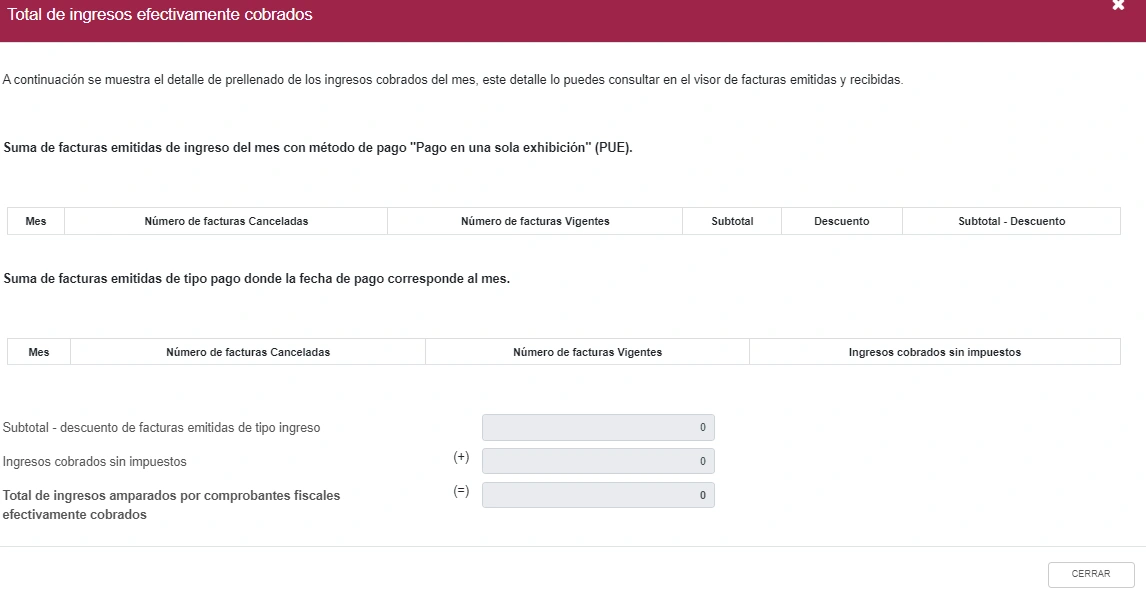
Rule 3.13.7 of the 2026 RMF provides that:
- monthly ISR is filed through the ISR simplificado de confianza. Personas fisicas return;
- the filing is due by the 17th day of the following month;
- the form is prefilled with income, credit-note and payment CFDI issued during the period;
- the monthly payment is final;
- annual-return relief applies only to RESICO income.
Review the prefilled return before sending it. An invoice may still be unpaid or may have been canceled or replaced. Compare the documents with the payments received so that each amount is reported in the correct period.
Annual-return relief and other income
| Income type | General treatment |
|---|---|
| Business activity in RESICO | Final monthly payment; annual-return relief for that income. |
| Professional services in RESICO | Final monthly payment; annual-return relief for that income. |
| Rental income in RESICO | Final monthly payment; annual-return relief for that income. |
| Wages | Separate annual calculation when a filing obligation applies. |
| Interest | Separate annual calculation when a filing obligation applies. |
| Digital platforms | Check the regime: rule 3.13.3 bars combining certain platform income with RESICO. |
Rule 3.13.8 requires a separate annual calculation for wages and interest when an individual in RESICO also earns those types of income. Relief for RESICO income does not remove an annual-return obligation arising under another chapter of Title IV of the Income Tax Law.
The MXN 3.5 million limit
Article 113-E of the Income Tax Law allows individuals with business, professional-service or rental income to choose RESICO if the prior year's income did not exceed MXN 3.5 million. A person starting activities uses an annual estimate subject to the same limit.
Keep a running total during the year to see how close you are to the limit. Check the treatment of any unusual income before excluding it. Rule 3.13.4 lists specific exclusions; an amount is not excluded simply because it came from outside your usual work.
| Monthly control | Evidence to keep |
|---|---|
| Collected income | CFDI, payment complement and collection date. |
| Year-to-date income | Amount subject to the limit and each excluded item with its legal basis. |
| Withholding | CFDI and the amount withheld by legal-entity clients. |
| VAT | Taxable base, rate, VAT charged and creditable VAT. |
Withholding when a legal entity pays
Article 113-J requires a legal entity paying an individual in RESICO to withhold 1.25% of the amount paid, excluding VAT. The individual credits that withholding against the monthly ISR payment.
Under rule 3.13.13, the legal entity may omit a separate withholding receipt when the individual's CFDI meets the requirements and expressly reports the withheld tax. The legal entity must still withhold and pay the tax to SAT.
The CFDI, bank collection and prefilled return should report the same payment and withholding. Correct an omitted or duplicated withholding with the party that issued the document or made the payment.
VAT and monthly records
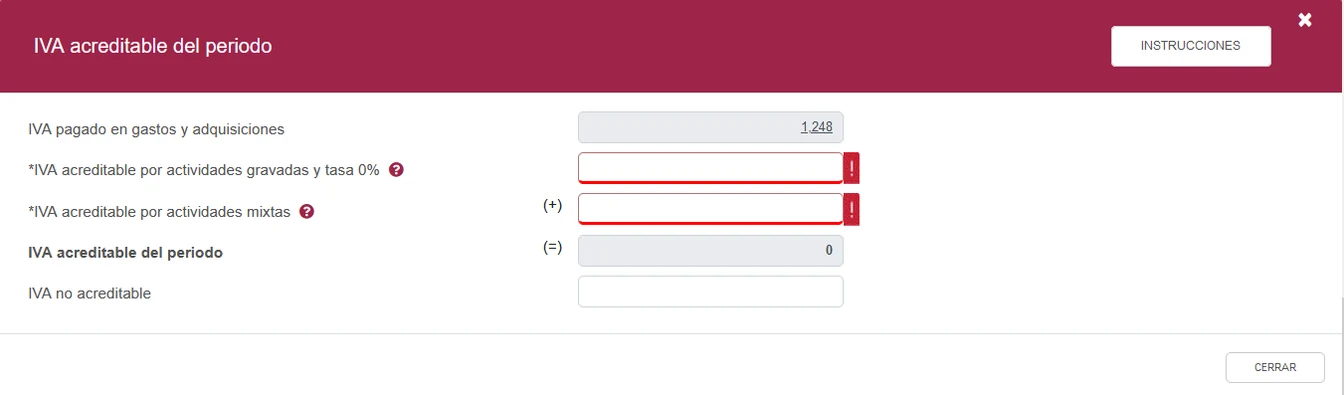
Annual-return relief for ISR does not remove VAT. Rule 3.13.19 allows a final VAT payment through IVA simplificado de confianza by the 17th day of the following month.
For each monthly close, reconcile:
- issued, canceled and replaced CFDI;
- collections and payment complements;
- ISR and VAT withholding;
- output VAT actually collected;
- creditable VAT actually paid and supported;
- filing acknowledgments, payment references and bank receipts.
Rule 3.13.17 relieves RESICO individuals and legal entities from submitting electronic accounting records and the DIOT. It does not remove the duty to keep records, CFDI and support for each calculation.
Leaving RESICO during the year
When a disqualifying event occurs, the taxpayer must file an update to economic activities and tax obligations. Rule 3.13.5 governs payments beginning in the month after the exit and provides different treatments based on prior compliance.
Before recalculating a period, determine:
- the date the disqualifying event occurred;
- accumulated income and the category of each amount;
- final monthly payments already filed;
- the regime that applies after the exit;
- the provisional and annual returns that remain due.
Before correcting earlier months, ask which treatment under rule 3.13.5 applies to your case. Some previous payments may remain final if the rule's conditions are met, so they should be reviewed before deciding which returns to amend.
Legal entities in RESICO
| Topic | Individual | Legal entity |
|---|---|---|
| Monthly ISR | Final payment under rule 3.13.7. | Provisional payment toward annual tax. |
| Annual return | Relief only for RESICO income. | Annual return remains mandatory. |
| Monthly form | ISR simplificado de confianza. Personas fisicas. | ISR de confianza. Personas Morales. |
| Submission | Password or e.firma, depending on the service. | Rule 3.13.16 requires e.firma when the form is completed. |
Rule 3.13.16 sets the legal entity's provisional-payment deadline on the 17th day of the following month. The form uses data from CFDI and prior payments. Corrections to those prefilled amounts require the corresponding amended returns.
Checks before the monthly close
| Finding | Action |
|---|---|
| Year-to-date income is nearing MXN 3.5 million | Project collections and identify which items count toward the limit. |
| The individual also earns wages or interest | Assess the separate annual calculation. |
| There is digital-platform income | Confirm compatibility before reporting it as RESICO income. |
| Withholding amounts do not match | Compare the CFDI, payment and prefilled return. |
| Monthly returns are missing | Prepare each period using actual collections and supporting records. |
| The taxpayer left the regime | Establish the exit date, update notice, later payments and annual-return treatment. |
Official sources
- SAT: compiled 2026 RMF, chapter 3.13.
- SAT: monthly and final RESICO returns.
- Chamber of Deputies: Income Tax Law.
- SAT: 2026 tax rules.
Official links to complete the task
Open official services from a new browser tab, confirm the taxpayer and period, and save the resulting acknowledgment or evidence with the case.