

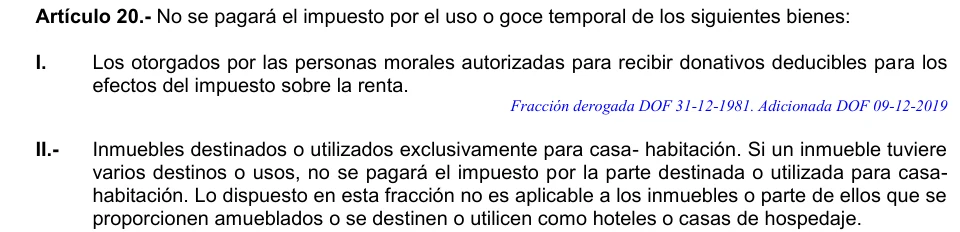
Before looking for deductions, identify the transaction you actually conduct. An unfurnished apartment used exclusively as a home and furnished accommodation offered by the night can follow different tax paths. The app's name or the contract's label cannot replace a review of the facts: the activity matters for income tax, while property use and characteristics matter for the VAT exemption. See Articles 113-A, 114 and 115 of the LISR and Article 20(II) of the LIVA.
What you need to distinguish
Publicación de InstagramMostrarOcultar
Original Fintax Instagram publication about rentals, Airbnb and deductions based on the actual transaction.
Intermediation means connecting third-party providers and customers under Article 18-B(II) of the LIVA. Using a tool that merely processes payments does not establish that this intermediation exists. Check who manages the booking, how the service is agreed and who collects payment.
| Review point | A: unfurnished home | B: platform-mediated lodging |
|---|---|---|
| Actual activity | Exclusive residential use | Furnished accommodation by the night |
| Contract and facts | 12-month contract; property supplied unfurnished | Bookings and collection mediated by an Article 18-B II platform |
| ISR treatment | Rental income chapter; review Articles 114 and 115 | Article 113-A; 4% lodging withholding |
| 35% deduction | Option within the rental income chapter | Does not carry over to Article 113-A lodging |
| IVA alert | Review the exemption for exclusive residential use | Residential exemption excludes furnished properties and lodging |
These distinctions follow Articles 113-A, 114 and 115 of the LISR and Article 20(II) of the LIVA. The optional 35% deduction belongs to the rental income chapter. It is not a universal deduction for all property-related income.
Example: two properties owned by one individual
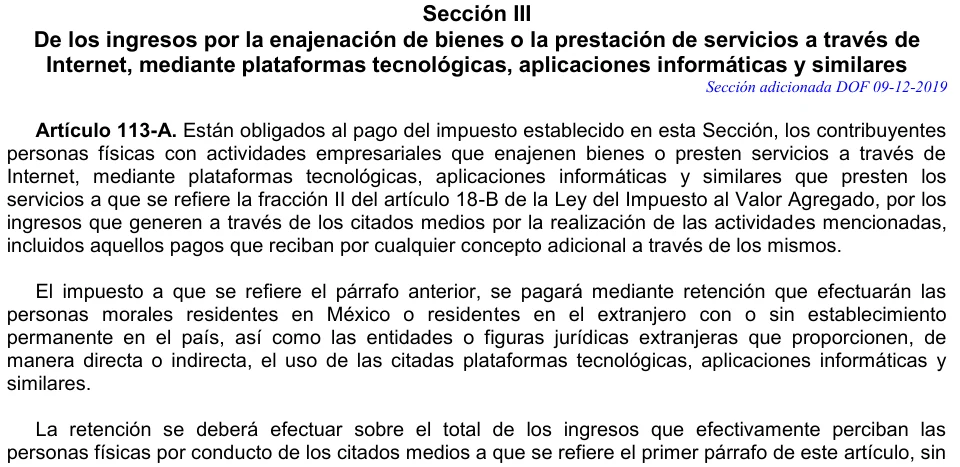
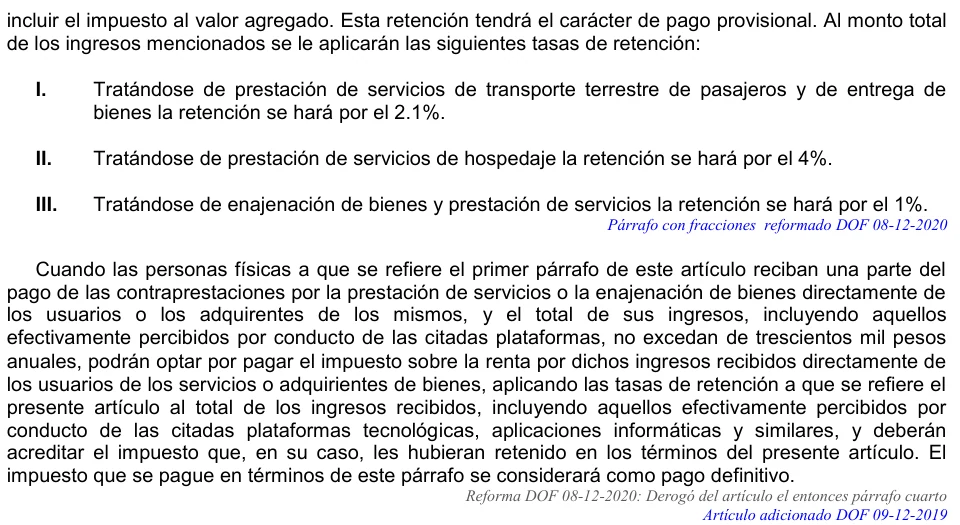
Assume a Mexican individual conducts both transactions. For A, they rent an unfurnished apartment exclusively as a home for MXN 12,000 per month under a 12-month contract. For B, they offer another, furnished apartment by the night through a platform that actually intermediates bookings and collection. During the period reviewed, B produces MXN 10,000 in lodging income actually collected, excluding IVA, and a commission of MXN 1,000, also excluding IVA.
For B, ISR withholding is MXN 10,000 × 4% = MXN 400. The base is gross income actually received, excluding IVA, rather than the MXN 9,000 remaining after the commission. Article 113-A of the LISR establishes this treatment. The MXN 400 is that withholding amount, not the final ISR liability or the bank deposit.
When withholding can be final
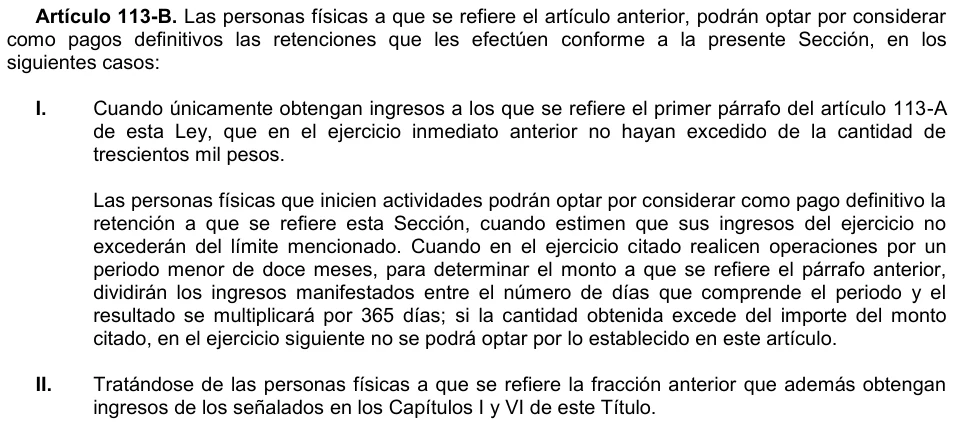
As a general rule, Article 113-A withholding is provisional. The final-payment option under Article 113-B requires, among other conditions, that income from that activity in the previous tax year not exceed MXN 300,000 and that the individual receive only that income, although salary and interest under Chapters I and VI are also permitted. When starting activities, review the article's estimation and annualization rules. Notice must be filed within 30 days following the first income received, under the LISR.
In this example, A produces Chapter III rental income. The individual therefore fails the income-type condition for choosing final treatment for B, even if platform income were below MXN 300,000. Adding both rental streams against that threshold does not resolve eligibility. The option cannot be changed for five years, ceases to apply if its conditions are breached, and allows no deductions corresponding to that activity: Article 113-B of the LISR.
Recommended controls before filing
- Create a file for each property: contract, actual use, furnishings, services offered and length of stays.
- Document the booking and collection channel; establish whether intermediation exists and retain its terms.
- Reconcile bookings, gross collections, cancellations, refunds, commissions, CFDI tax documents and withholdings against the deposit. Do not record only the net amount received.
- Review your RFC tax registration, registered activity, ISR treatment and applicable notices before selecting deductions.
- Check state lodging tax separately based on the property's location.
These are recommended controls, not a universal list of statutory duties. For IVA, review the property or service characteristics, VAT charged, withholdings and supporting tax documents. ISR withholding neither determines the IVA calculation nor automatically makes IVA withholdings final. Relevant provisions include Articles 18-J(II) and 20(II) of the LIVA.
Frequently asked questions
Does using Airbnb allow a 35% deduction?
Not by itself. Classify the activity first. The 35% option belongs to the rental income chapter, not Article 113-A lodging: LISR, Articles 114 and 115.
Is a residential contract enough for the IVA exemption?
No. Use must be exclusively residential; the exemption excludes furnished properties, hotels and lodging houses. The facts matter under Article 20(II) of the LIVA.