
Quick Answer
VAT is creditable when the transaction meets the applicable legal requirements, the tax is properly transferred, and there is consistent evidence of CFDI, payment, record, and period. Having the XML is necessary but does not replace reviewing the substance or reconciliation.
To credit VAT in Mexico you need more than an XML: review the transaction, CFDI, payment, record, and period before including it in the tax return.
Review the complete VAT evidence chain
For each amount, connect a real business transaction, a valid CFDI, the correct VAT treatment, identifiable payment and the period in which the credit is claimed. Mark partial payments, imports, withholding and mixed-use expenses separately. An XML alone does not prove that every condition for creditable VAT has been met.
The answer varies depending on the transaction
Imports, exempt acts, proration, partial payments, and expenses with limits require specific analysis; do not apply a general rule without classifying the case.
Credit Matrix
| Requirement | Useful Evidence | Alert | Action |
|---|---|---|---|
| Actual transaction | Contract, order, or deliverable | Generic concept | Request support |
| Correct CFDI | Valid XML and tax data | Inconsistent RFC or tax | Correct CFDI |
| Traceable payment | Bank statement and application | Grouped payment without breakdown | Distribute by UUID |
| Consistent period | Auxiliary records, DIOT, and return | Different totals | Reconcile before submitting |
Why having an invoice does not resolve crediting
Creditable VAT does not arise simply by downloading an XML. The review starts with the transaction: what was purchased, who received it, how it was used, when it was paid, and if the tax is separately transferred. Then it is confirmed that accounting, bank, CFDI, and return reflect the same period.
When an invoice mixes concepts, there is a partial payment, or the supplier replaced the CFDI, it is advisable to keep the case under review. Crediting first and seeking support later turns a small operational difference into a difficult-to-explain tax reconciliation.
Minimum file before crediting
- Confirm that the purchase or service is strictly identifiable with the business activity.
- Validate RFC, usage, amount, transferred taxes, and CFDI validity.
- Link the payment with bank, accounting entry, and supplier document.
- Separate creditable VAT, non-creditable VAT, and items pending clarification.
- Cross-check the total per supplier against the DIOT and the period's return.
Example: the XML exists, but the payment is unclear
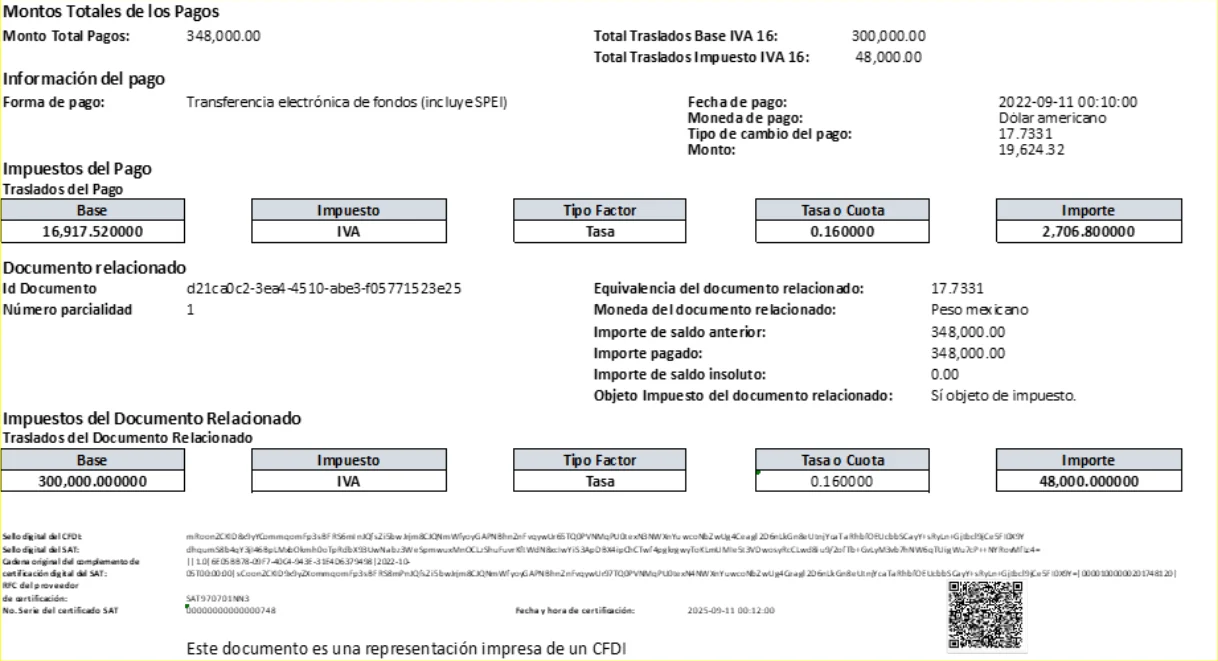
A company receives a supplier CFDI in July, but the bank charge appears in August and includes two invoices. Before crediting, separate each receipt, document how the payment was applied, and confirm the corresponding period. If the file does not allow reconstructing this relationship, the problem is not fixed by marking the XML as valid.
Creditable VAT is supported by a complete chain: actual transaction, correct CFDI, accounting record, identifiable payment, and consistent period.
— Fintax
Review process in five steps
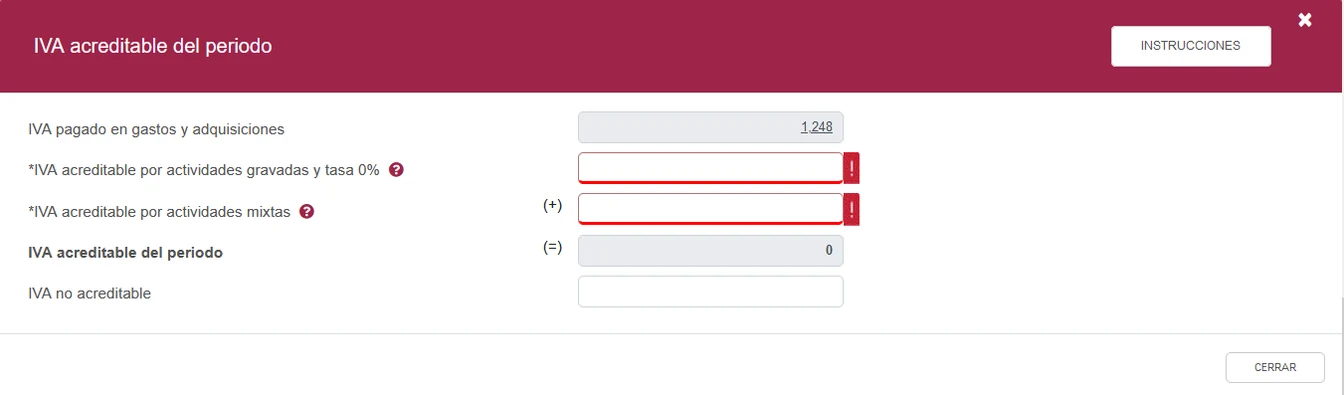
- Download CFDI and auxiliary records for the period without assuming all are valid.
- Classify each transaction by supplier, expense type, and VAT treatment.
- Link payment, accounting entry, contract, order, or deliverable with the UUID.
- Final reconciliation against DIOT and return before submitting.
- Save review sheet, differences, and authorizations in the monthly folder.
Errors that break traceability
- Crediting all downloaded CFDIs without confirming they correspond to an actual transaction.
- Using the XML date as the only criterion when payment occurred at another time.
- Not separating partially deductible expenses or concepts unrelated to the activity.
- Submitting DIOT and return with different supplier catalogs.
Sources and further reading
Consult official sources: Current VAT Law, Official CFDI verifier, Official DIOT service.
To complete the process within Fintax, review: Guide to review CFDI, DIOT checklist, Guide to consult monthly returns and acknowledgments.
Frequently Asked Questions
Does a valid CFDI guarantee that VAT is creditable?
No. Validity helps verify the document, but the applicable requirements for the transaction, payment, record, and period must also be met.
What do I do with a payment that covers multiple invoices?
Prepare a worksheet that distributes the payment by UUID and amount, and keep the bank statement and supplier support.
How do I detect differences before filing?
Compare VAT auxiliaries, received CFDIs, banks, and DIOT by supplier; any unexplained total goes to review.
What to do now
Turn this review into a file with responsible person, date, source, and evidence. If there is a material difference, an overdue obligation, or a decision that changes the calculation, validate the case with your accounting responsible before filing, canceling, or paying.
Official links to complete the task
Open official services from a new browser tab, confirm the taxpayer and period, and save the resulting acknowledgment or evidence with the case.