
If the investment cannot be explained on one page, do not transfer yet
Institution, product, purpose, horizon, liquidity, possible loss, costs, tax records, and money path should be clear before a rate or chart becomes persuasive.
A first investment decision should begin with the job assigned to the money and the ways the plan can fail. A written memo separates the provider, legal product, and marketing promise. It also creates a fair benchmark for reviewing the outcome later.
Publicación de InstagramMostrarOcultar
Original Fintax post with essential questions before beginning to invest.
Confirm that the capital is actually available
| Question | Reason to wait | Control first |
|---|---|---|
| Is the month funded? | Ordinary spending depends on a card | Stabilize cash flow |
| Is there a reserve? | An urgent bill would force a sale | Build liquid protection |
| Is debt expensive? | Its cost dominates plausible return | Compare repayment and investing |
| Does the goal have a date? | Money may be needed tomorrow | Set horizon and liquidity |
There is no universal debt balance or starting amount. The operating rule is narrower: capital already assigned to housing, tax, emergencies, or a near-term bill is not available merely because it sits in the same account.
Eight fields in the decision memo
| Field | Minimum answer | Warning |
|---|---|---|
| Goal | Amount, purpose, and date | “Make money” without a target |
| Institution | Legal name and regulator | Only an app or influencer name |
| Product | The asset legally owned | A “plan” without documents |
| Return | Calculation method and period | A large rate without a common basis |
| Risk | How loss can happen | “Guaranteed” without an identified obligor |
| Liquidity | Exit timing and cost | Ambiguous or conditional withdrawal |
| Costs and tax | Fees, spread, withholding, records | Gross yield only |
| Operations | Funding, verification, and recovery | Transfer to a personal account |
1. Verify the institution, then the product
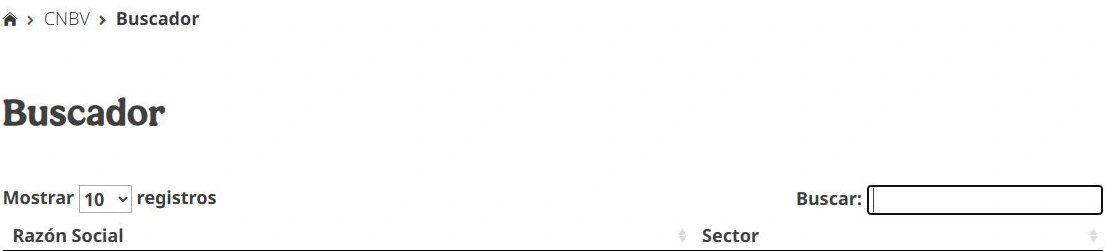
Mexico's CNBV maintains the registry of supervised entities and authorized deposit takers. Search the exact legal name, sector, and status; a name that resembles a real institution proves nothing.
- Type the official registry address yourself instead of following a seller's link.
- Match legal name, domain, telephone, receiving account, and contract.
- Confirm which authority supervises the specific activity.
- Identify whether the asset is a deposit, security, fund share, loan, cryptoasset, or something else.
- Download the contract, disclosure, prospectus, or key document before funding.
CNBV also links international warnings about unauthorized providers and fraud schemes. “Based abroad” does not answer questions about authorization, jurisdiction, custody, or a workable claim route.
2. Draw the complete money path
- A source bank account in your name.
- A receiving beneficiary that matches the regulated or contractual mechanism.
- A purchase confirmation or allocation of the asset.
- A statement showing owner, units, price, balance, and movements.
- A withdrawal route to your own account and a settlement timetable.
An app balance alone does not prove ownership of an asset. Retain the first funding record, confirmation, statement, and test withdrawal. Stop when a seller changes the receiving account over chat, asks for a personal transfer, or invents a release payment.
3. Put every return on the same basis
| Input | Question | Why it matters |
|---|---|---|
| Period | Annual, monthly, total, or since inception? | Prevents scale mismatch |
| Base | Average balance, price, or original capital? | Changes the effective result |
| Gross or net | Before or after costs and tax? | Measures what is retained |
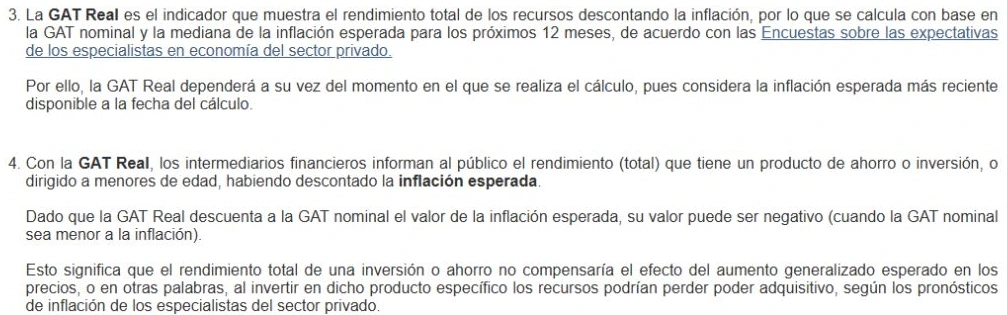
| Nominal or real | Does it account for inflation? | Separates pesos from purchasing power |
| Fixed or variable | Who can change it, and when? | Avoids treating a reference as a promise |
CONDUSEF's Review, Compare, Decide tool helps users compare financial products. A sound comparison keeps amount, term, cutoff date, reinvestment assumption, and treatment of costs consistent.
Advertised return is not realized return
Label a figure as contractual, targeted, historical, or promotional. Past performance does not bind the next period. A fixed rate can carry liquidity or reinvestment risk; a variable price can finish below cost; a promotion may apply only to a limited balance or term.
4. Describe risk in pesos and time
| Risk | Concrete question | Control |
|---|---|---|
| Default | Who owes the money and what supports payment? | Issuer, security, concentration |
| Market | Can price fall before sale? | Horizon and loss tolerance |
| Liquidity | How long does exit take, and is there a buyer? | Reserve outside the asset |
| Inflation | What can the future amount purchase? | Real-value target |
| Currency | Are goal and asset in different currencies? | Exchange-rate scenarios |
| Operations | What if access or instructions fail? | Recovery and evidence |
| Fraud | Are institution, account, and product genuine? | Official registries and channels |
CONDUSEF's learn-to-invest guide connects investor profile, goal, horizon, return, risk, and liquidity. A person is not permanently “conservative” or “aggressive”: they may tolerate fluctuation for a 15-year goal but not for next month's tuition.
5. Read the exit before entering
- Cutoff time for a sale or withdrawal request.
- Business days until cash is available.
- Penalty, spread, fee, or market price.
- Minimum balance or locked portion.
- Consequence of leaving before maturity.
- Process after death or loss of access capacity.
cetesdirecto states that an investment decision considers amount, horizon, risk, and return, and documents differences among Mexican government securities. A common issuer does not make maturities, prices, payments, and liquidity identical.
6. Calculate the net outcome
- Purchase, sale, management, withdrawal, or inactivity fees.
- Difference between purchase and sale prices.
- Currency conversion and transfer cost.
- Applicable withholding, tax, and recordkeeping.
- Advisory or packaged-product cost.
- Operating time during which cash is unavailable.
Do not infer tax treatment from the commercial name. Retain statements, certificates, withholding records, purchases, sales, and exchange rates. Identify the applicable Mexican treatment before the annual return when interest, dividends, gains, losses, or foreign assets are involved.
7. Run a small end-to-end test
- Open through the official channel and secure recovery.
- Fund an amount that does not endanger a goal.
- Verify confirmation and statement ownership.
- Observe return, price, fees, and withholding.
- Execute a partial withdrawal and measure timing and destination.
- Scale only when operations match the contract and memo.
8. Write a monitoring rule
| Event | Question | Useful response |
|---|---|---|
| Monthly | Do balances and movements reconcile? | Archive statement and anomalies |
| Quarterly | Does it still serve the goal? | Rebalance only by rule |
| Rate change | Did expected return change? | Update scenario, do not chase |
| Price fall | Did the documented risk occur? | Apply the rule, ignore noise |
| Personal change | Did date or capacity change? | Reduce risk or contribution |
Stop-transfer signals
CONDUSEF warns about fast-profit promises, recruitment pressure, and missing information. Artificial urgency blocks verification; missing today's “opportunity” is cheaper than losing the capital.
- A high, fixed, risk-free return presented as certain.
- Recruitment bonuses or payments sustained by new participants.
- Legal name, contract, and receiving account do not match.
- Only crypto, cash, or a personal transfer is accepted.
- Remote-access software or authentication codes are requested.
- Withdrawal requires an undisclosed tax, insurance, or release payment.
- Testimonials replace audited information, prospectus, or registration.
A completed example
Goal: MXN 60,000 for equipment in 24 months. The investor keeps emergency money separate, verifies the institution, identifies a debt product, documents variable return, business-day withdrawal and costs, tests with MXN 1,000, and schedules deposits. A second offer is rejected because it promises to double the money and receives funds through a personal account, despite recent payment screenshots.
Frequently asked questions
What is the best first investment?
The one aligned with a defined goal, horizon, liquidity, tolerable loss, and an operation you understand. A popular product can be wrong for a near date or a person without reserves.
Does regulation eliminate risk?
No. It reduces certain legality and operating risks and creates supervision, but the product may retain market, credit, liquidity, currency, inflation, or concentration risk.
Is diversification the same as using many apps?
No. Diversification concerns economic exposures, issuers, assets, currency, and horizons. Several interfaces can hold the same underlying risk.
When should the memo change?
When the goal, horizon, product, fees, institution, income, or decision premise changes. Preserve each version so the history is not rewritten after seeing the result.