

Understanding a business's tax position starts with three separate questions: How is it registered? What is its compliance result? Which assessed tax debts need review? The constancia de situación fiscal, compliance opinion and tax debt inquiry answer different questions. A certificate with correct details does not replace the opinion; a positive opinion does not amount to a complete audit. Registration and compliance have distinct frameworks under Articles 27 and 32-D of Mexico's Federal Tax Code.
What each document answers
Publicación de InstagramMostrarOcultar
Original Fintax Instagram publication about documents for understanding a business's tax position.
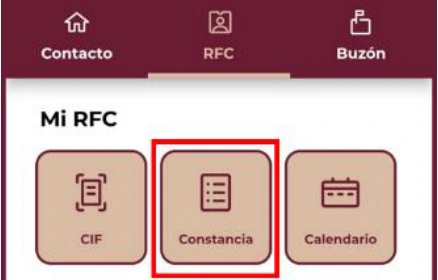
The SAT-issued tax registration certificate lets you check taxpayer information such as the RFC, registration, activity, tax regime and obligations. Its purpose is to identify tax details, not establish that no assessed tax debts exist. See SAT's description of the constancia de situación fiscal. For the other two components, consult Rule 2.1.36 of the 2026 Miscellaneous Tax Resolution and SAT's tax debt portal.
| Document or inquiry | Question it answers | What it does not establish | Next cross-check |
|---|---|---|---|
| Tax registration certificate | What details, regime and obligations does SAT record? | Absence of assessed tax debts or a comprehensive review | Compare with the business's actual activity |
| Compliance opinion | What result do the reviewed criteria produce when queried? | Accuracy of all calculations and amounts declared or paid | Read the result and reasons; check returns and acknowledgments |
| Tax debt inquiry | Which identified assessed tax debts need review? | Absence of all risk because no debt appears | Review the assessment, period, notification, balance and payments |
Legal scope and recommended controls
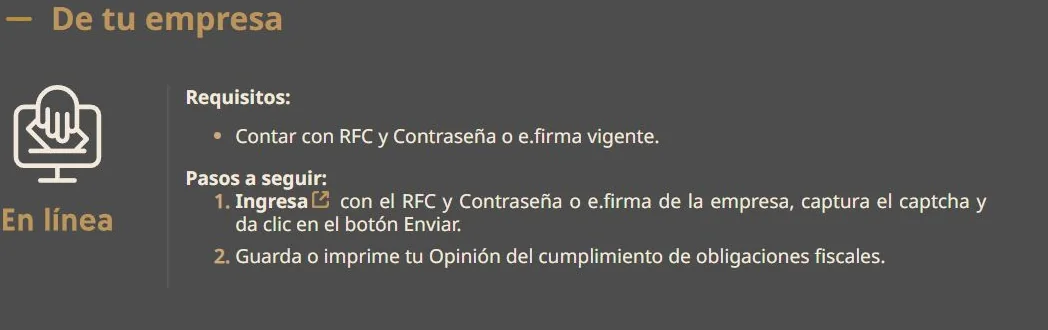
Rule 2.1.36 provides for positive, negative, suspended and registered-without-obligations results. The review uses institutional system information at the time of the inquiry; it is not a favorable determination on calculations or amounts of taxes declared or paid. Certain assessed tax debts can also be treated as current under applicable conditions, for example, where authorized installment payments remain authorized without revocation. A positive opinion and an assessed debt under that arrangement can therefore coexist without an automatic contradiction. See Rule 2.1.36 and Article 32-D.
As a recommended control, gather inquiries close together in time, record when each document was obtained and confirm that all relate to the same RFC. Do not present the resulting file as a certificate of zero risk. Download through authorized accounts, retain issued files and share only what is needed, never passwords. These practices organize the review; they are not additional requirements established by the cited documents.
How to choose the next step
- Compare the certificate with actual business activity. Identify differences in details, regime or obligations without assuming that one tax regime applies universally.
- Obtain the opinion and read its specific reason. Procedure 26/CFF provides for online access using the RFC and password or e.firma; do not infer a missing tax from the overall result.
- If the reason identifies a genuine omission, address it through the applicable route. If you have evidence of a filed return, check that it matches before requesting clarification.
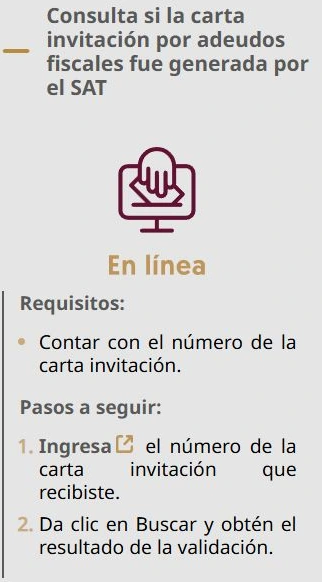
- For each identified assessed tax debt, review the assessment, period, item, notifications, legal status, balance and receipts. Check how payments were applied before paying again.
Obtaining the opinion and requesting clarification are separate procedures: 26/CFF and 27/CFF in Annex 2 of the 2026 Miscellaneous Tax Resolution. Assessed tax debts require their own review through the tax debt service.
Example: a filed return appears to be missing
Assume a business owner has a current registration certificate showing the correct activities. Their negative opinion identifies an allegedly missing VAT return for June 2026. They retain a filing acknowledgment for that period and a bank receipt that appears to match the payment. This is hypothetical: those records justify checking the discrepancy, but do not yet establish that SAT's finding is incorrect.
- Identification: match the RFC on the opinion, filing acknowledgment and payment.
- Return: confirm the tax, period and whether the return is original or amended.
- Filing: verify the reference number, date and acceptance in the acknowledgment; a draft does not prove filing.
- Payment: check the payment reference, period and amount, and confirm that the payment corresponds to that return.
If a documented discrepancy remains after these checks, submit the clarification under procedure 27/CFF with the relevant documents and notices. Retain the case reference, follow up on the response and request a new opinion once the inconsistencies have been resolved. Do not assume an outcome or guaranteed turnaround. This route is described in Annex 2 and Rule 2.1.36.
Finish with a one-page findings record: document and date, information checked, match or discrepancy, evidence, pending action and responsible person. In this example, the action could be to clarify the finding with supporting records, rather than filing or paying again without verification.
Frequently asked questions
Can my certificate be correct while my opinion is negative?
Yes. The certificate identifies registered details; the opinion reviews compliance criteria. Matching activities does not itself resolve a negative finding, under the respective scopes described by SAT and Rule 2.1.36.
Does a positive opinion mean everything was audited?
No. It does not validate every calculation or amount declared and paid. Continue ordinary reviews of returns and assessed tax debts; the opinion's scope is limited by Rule 2.1.36.
Does a negative opinion mean an automatic fine?
It does not itself amount to a specific fine. Identify the reason and corresponding evidence; the opinion's result is governed by Rule 2.1.36.