
Your first client accepts the quote and asks for payment instructions. Before replying, make the first accounting consultation a decision-making meeting: what to review about your tax position, how to document the transaction and who will handle each task. The useful outcome is a written agreement that lets you act without relying on memory or scattered messages.
Separate tax obligations from professional support
Publicación de InstagramMostrarOcultar
Original Fintax Instagram publication about when to seek accounting support for a new business.
Meeting before the first payment is an operational recommendation, not a universal requirement to hire an accountant before selling. Registration, updates, accounting and documentation obligations depend on the taxpayer's circumstances; issuing tax invoices is governed by Articles 29 and 29-A of the Federal Tax Code (CFF). The consultation should identify what applies to your situation rather than start with a generic service package.
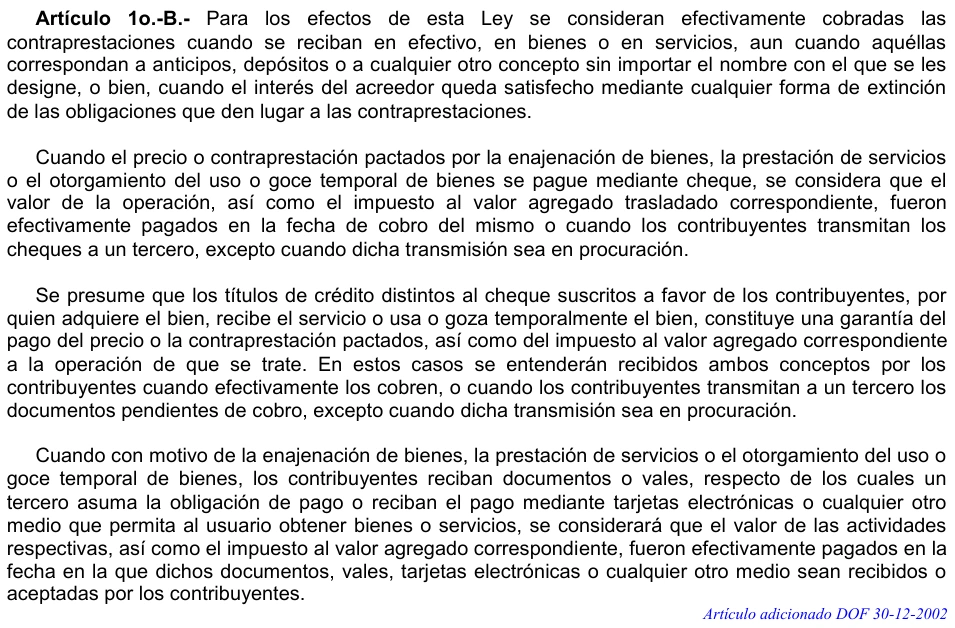
Receiving payment is also different from earning a profit. For activities within the scope of VAT, Article 1-B addresses consideration actually collected, including first payments; treatment depends on the nature of the activity under Article 1. Do not assume every service receives the same treatment or wait until the project's profit is known to review the payment. Source: VAT Law, Articles 1 and 1-B.
Bring a one-page brief and supporting documents
Describe what you will actually sell, to whom and how you will deliver it. Brand identity design with two deliverables is more useful than creative services. Attach the proposed quote or contract and note whether the client has accepted it. This brief is a recommended tool for organizing the consultation, not a legally required form.
- Your current RFC tax registration status and registered activities, with available supporting documents.
- Income you already receive, such as salary, and any involvement of business partners.
- Expected customers and available information about your first client.
- Proposed price, advance payment terms and expected payment date.
- Main costs and whether you have employees; explicitly state if you have none.
Turn questions into verifiable outcomes
Use this table during the meeting. The suggested division of responsibilities needs both parties' agreement. If evidence is missing, record which document is needed and who will obtain it. Keep unresolved decisions visible, especially when they affect the payment instructions you will send.
| Question | Evidence | Written outcome | Who handles it |
|---|---|---|---|
| Does the current RFC need updating? | Tax status and activity description | Required update or confirmed current status | Accountant reviews; owner validates facts |
| Which tax regime applies? | Activity and existing income | Regime supported by applicable eligibility requirements | Accountant analyzes; owner confirms facts |
| What does the first payment represent? | Quote, contract and schedule | Purpose, expected date and reviewed treatment | Owner provides evidence; accountant analyzes |
| How will it be documented and invoiced? | Client information and agreed terms | Procedure and designated invoice issuer | Person appointed by both parties |
| Who handles applicable filings and payments? | Initial scope and identified obligations | Task allocation and evidence of completion | Both parties accept responsibilities |
Example: a design project before payment
Assume an independent designer already has an RFC for salary income. She has quoted a company a project with a base fee of 25,000 MXN, proposes a 40% advance and has not received any money. The proposed portion is 25,000 × 40% = 10,000 MXN. This arithmetic identifies the upfront portion of the fee; it does not, by itself, establish the final amount to collect.
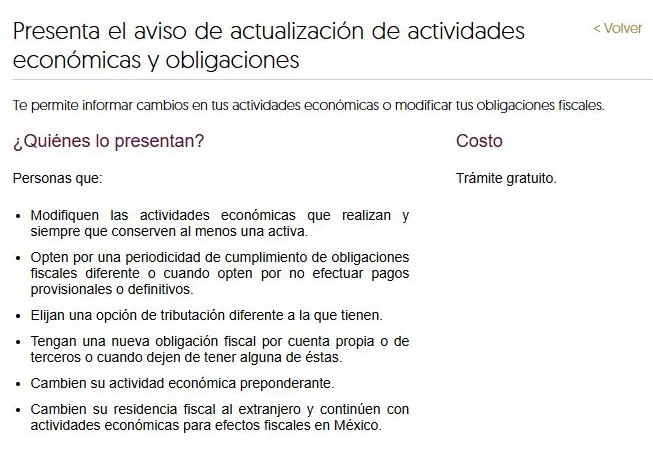
At the meeting, both parties review whether the quote clearly addresses VAT and any applicable withholding, along with the activity, tax regime and client's status. An existing RFC for salary income is the starting point for reviewing a possible update, not a reason to assume a new registration or an automatic tax regime. The framework for that review is in the CFF, Article 27.
Finish with an agreed initial scope
- Record each decision, its supporting evidence and any unresolved item.
- Assign an owner and internal target date to each task, distinguishing that date from any applicable legal deadline.
- Record the expected date of the first transaction and who will confirm actual receipt of payment.
- Agree who invoices, handles applicable filings and makes payments, and how evidence will be shared.
- Define authorizations and controlled access; avoid sending passwords through WhatsApp.
Before finishing, both parties should accept the scope in writing: included tasks, outstanding items and how completion will be confirmed. Keep the accepted version with the quote. These are recommended controls to prevent gaps in responsibility; they do not replace the obligations identified for your activity.
Frequently asked questions
When should I arrange the meeting?
Once you have a specific transaction to review and before collecting the first payment. You can then bring the price, client information and terms, and resolve outstanding questions before sending payment instructions.
What if I already have an RFC?
Bring your current tax information to review whether activities or obligations need updating. The decision depends on your circumstances under the CFF, Article 27; having an RFC does not by itself settle the new project's treatment.
What changes if I have already received money?
Disclose the dates, amounts and available documents at the start. Ask to separate the review of past transactions from decisions about future payments. A preventive meeting does not replace addressing earlier transactions.